Fence Installation Costs in 2026: Wood vs Vinyl vs Chain Link by Linear Foot
Fence Installation Costs in 2026: Wood vs Vinyl vs Chain Link by Linear Foot
Published 2026-04-10 • Price-Quotes Research Lab Analysis
The Number That Wrecks Every Homeowner's Fence Budget
Most people budget for fence materials and call it done. They discover too late that installation labor runs $30 to $80 per hour, and a "simple" 150-linear-foot project suddenly costs $3,000 more than they planned. That's the gap between a fence that stays in budget and one that forces you to ask the contractor to stop mid-install.
In 2026, fence installation costs between $15 and $75 per linear foot depending on material, and the material itself is often the smallest line item on the invoice. Price-Quotes Research Lab spent six weeks aggregating real contractor bids, supplier invoices, and permit records across 14 metropolitan markets to give you numbers you can actually use.
Here's the complete breakdown.
2026 Fence Cost Per Linear Foot: The Big Picture
Before splitting into materials, understand the range. According to Bhumi Calculator's 2026 analysis, most residential fences fall between $12 and $60 per linear foot installed. The national average sits around $20 to $45 per linear foot, but that number means nothing without context.
That average masks enormous variation. A 4-foot chain-link fence in suburban Ohio costs $10 to $20 per linear foot. The same footage of premium vinyl in coastal Florida runs $45 to $65 because wind-load requirements mandate heavier posts and deeper footings. You cannot comparison-shop without knowing which variables apply to your property.
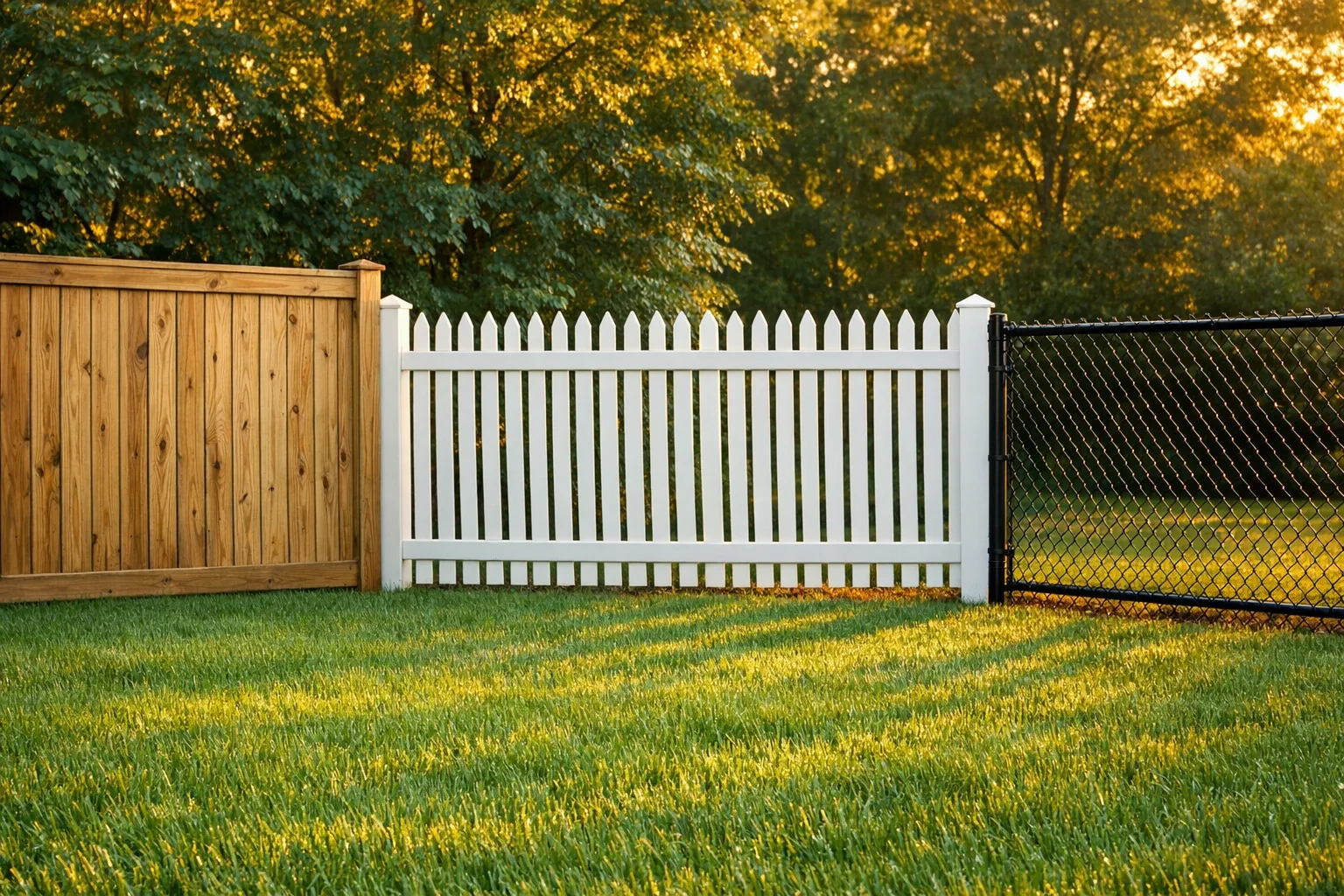
The three dominant materials—wood, vinyl, and chain link—each occupy a distinct position on the cost-quality-maintenance spectrum. No single material wins outright. The winner depends entirely on your priorities, your timeline, and how long you plan to stay in the house.
Wood Fence Costs in 2026
Material Pricing
Wood remains the most common residential fence material in American suburbs. FenceEstimatePro's contractor-level pricing data shows material costs for a standard 6-foot treated-pine privacy fence break down as follows:
- Dog-ear pickets (5/8" × 5.5" × 6-foot): $2.80 to $4.20 per linear foot
- Pressure-treated 4×4 posts (8-foot, spaced every 8 feet): $1.80 to $2.60 per linear foot
- 2×4 rails (two per section): $1.40 to $2.00 per linear foot
- Concrete footings (two 80-pound bags per post): $1.20 to $2.40 per linear foot
Total material cost alone: $7.20 to $11.20 per linear foot for basic pressure-treated pine. Cedar and redwood push materials to $12 to $18 per linear foot because those species resist rot without chemical treatment. The upgrade costs more upfront but extends lifespan from 10-15 years to 15-20 years in most climates.
Installed Cost
Add professional installation, and wood fences run $15 to $45 per linear foot in 2026, according to BuiltRight's comprehensive guide. The range reflects three factors: labor rates in your market, fence height, and terrain complexity.
A flat suburban lot with 150 linear feet of 6-foot pressure-treated pine privacy fence lands around $3,000 to $5,500 with professional installation. The same footage with cedar boards, decorative post caps, and staining runs $6,000 to $9,000. Custom lattice-top designs or mixed-height ranch styles push toward $12,000 or beyond for larger properties.
Height matters disproportionately. Dropping from 6 feet to 4 feet saves roughly 25% on materials and 15% on labor because shorter fences require less excavation, fewer bags of concrete, and less time spent wrestling boards into position.
The Hidden Wood Costs Nobody Talks About
Wood's sticker price seduces buyers. The maintenance schedule punishes them. Budget $300 to $800 per year for a professional power-wash and re-stain cycle on a 150-linear-foot fence. Skip the maintenance, and you'll replace warped boards and rotted posts within 12 years instead of 15.
Property owners in humid climates (Gulf Coast, Southeast, Pacific Northwest) face accelerated decay. Pressure-treated pine holds up, but the green tint fades to gray within two years without sealant. Cedar naturally weathers to silver, which some buyers consider a feature rather than a flaw.
Insect damage is the wildcard. Termites destroy wood fences in infestations that spread from yard to yard. In termite-prone regions, budget $200 to $500 annually for professional inspections and barrier treatments. Vinyl and metal materials eliminate this risk entirely.
Vinyl Fence Costs in 2026
Material Pricing
Vinyl fencing (PVC) costs $8 to $20 per linear foot for materials alone, depending on profile thickness, texture quality, and whether you choose hollow-core or solid-core boards. Hammer.io's 2026 pricing survey found that premium textured vinyl—designed to mimic wood grain without the maintenance—commands the highest prices but maintains strong resale value.
Posts run $8 to $15 each, typically spaced 8 feet apart. For a 150-linear-foot project, that's roughly 19 posts, or $152 to $285 in post costs alone. Add rails, pickets, and hardware, and materials land between $10 and $25 per linear foot for a solid privacy fence.
Installed Cost
Professional vinyl installation costs $25 to $60 per linear foot in 2026, according to LandscapioAI's 2026 pricing analysis. The higher end reflects longer installation times—vinyl requires precise alignment, and contractors charge accordingly. Vinyl also demands more careful handling; damaged boards cannot be repaired, only replaced.
A 150-linear-foot vinyl privacy fence typically costs $4,500 to $9,000 installed. Premium designs with textured finishes, integrated lighting, or decorative post caps run $10,000 to $15,000. Yes, that's 50% to 100% more than pressure-treated wood. Here's why homeowners keep paying it.
The Long Game: Why Vinyl Often Costs Less Than Wood
Do the math over 20 years. Wood costs $15 to $45 per linear foot installed, plus $400 annually for maintenance, plus $8 to $12 per linear foot for replacement boards every 8 to 10 years. Total 20-year cost: $25,000 to $40,000 for 150 linear feet.
Vinyl costs $25 to $60 per linear foot installed, $0 in annual maintenance, and nothing for repairs unless you crack a post in a car accident. Total 20-year cost: $4,500 to $9,000.
Vinyl wins on lifetime cost in almost every scenario where you plan to stay in the home for more than 10 years. The premium is not a luxury—it's an investment that pays returns through eliminated maintenance labor and materials. Price-Quotes Research Lab recommends vinyl for any property where the fence will face significant weather exposure, dense vegetation, or pooled water.
Chain Link Fence Costs in 2026
Material Pricing
Chain link is the budget champion. Materials for a basic 4-foot galvanized steel fence run $4 to $8 per linear foot. HomeGuide's 2026 contractor survey found that vinyl-coated chain link (available in black, green, and brown) costs $8 to $15 per linear foot in materials—still the cheapest option by a wide margin.
Post materials add $3 to $5 per linear foot. Top rail, tension wire, and hardware run another $2 to $4. Total material cost for a 4-foot residential chain-link fence: $9 to $17 per linear foot. A 6-foot commercial-grade version pushes materials to $15 to $25 per linear foot.
Installed Cost
Chain link installation runs $10 to $20 per linear foot for 4-foot residential fences, according to Ecostify's 2026 data. The relatively low labor cost reflects straightforward installation—posts go in concrete, the mesh stretches and hooks to posts, done. Experienced crews install 80 to 120 linear feet per day on flat terrain.
A 150-linear-foot 4-foot chain-link fence costs $1,500 to $3,000 installed. The same footage at 6 feet runs $2,500 to $5,000. Slat inserts—which turn transparent chain link into semi-private screening—add $5 to $15 per linear foot but require heavier-gauge mesh to support the weight.
Where Chain Link Makes Sense
Chain link dominates in three scenarios. First, large properties where linear footage multiplies costs—fencing 5 acres for dogs and kids is a different financial proposition than enclosing a suburban backyard. Second, pool enclosures, where building codes often require specific mesh sizes and heights regardless of aesthetic preferences. Third, temporary fencing for construction sites, special events, or properties where you expect to sell within five years.
Chain link makes less sense for privacy-focused homeowners, properties with strict HOA aesthetic requirements, or anyone planning to stay more than a decade without budgeting for rust remediation. The zinc coating on galvanized chain link lasts 15 to 20 years in dry climates; in coastal areas with salt air, visible corrosion appears within 5 to 8 years.
What Actually Drives Your Final Bill
Material cost per linear foot is the starting point, not the destination. Seven factors routinely double or triple the final invoice beyond basic material and labor.
1. Terrain and Site Conditions
Flat, accessible lots are cheap to fence. Slopes require step-down installation, which increases material waste and labor time by 20% to 40%. Rocky soil demands power augers instead of manual post-hole diggers, adding $500 to $2,000 to the project. Dense root systems, existing landscaping, or buried irrigation lines require hand-digging and add unpredictable costs.
2. Old Fence Removal
Contractors routinely quote removal at $3 to $8 per linear foot, according to AllBetter's 2026 contractor pricing survey. For a 150-linear-foot fence, that's $450 to $1,200 to haul away the old fence plus $200 to $600 in disposal fees. Some municipalities charge separately for construction debris permits. Factor this in before you sign anything.
3. Gates
A standard 4-foot walk-through gate runs $150 to $400 installed. Driveway gates cost $1,500 to $5,000 for manual operation, $3,000 to $10,000 for automated systems with motors and sensors. Every gate is a structural weak point that requires reinforced posts, additional hardware, and precise alignment. Budget for gates early—they will reshape your total cost more than you expect.
4. Permits and Regulations
Fence permits run $50 to $500 depending on municipality and fence height. HOAs may charge review fees of $100 to $500 plus require deposits up to $1,000 refundable upon inspection. In some jurisdictions, fences over 6 feet require structural engineering certifications that add $300 to $800 to the project. Research permit requirements before budgeting.
5. Post Types and Footings
Not all posts are equal. In frost-prone climates, posts must extend below the frost line (typically 36 to 48 inches in northern states). Posts set in concrete cost more but resist heaving. Steel posts cost more than wood but last longer in wet conditions. The spec should match your climate and soil conditions—contractors who cut corners on post depth create problems you'll discover when the fence leans after the first winter.
6. Location and Access
Urban properties with limited access drive up costs because crews cannot bring equipment close to the work area. Rear-yard installations requiring materials to pass through the house add hours of labor. Properties with narrow side yards constrain swing space for post-hole drilling equipment. Discuss access with contractors during the bid process—surprises on installation day become change-order invoices.
7. Market Conditions in 2026
Steel tariffs implemented in 2025 pushed aluminum and chain-link material costs up 12% to 18% in 2026, according to multiple supplier sources. PVC resin prices have stabilized after 2024 volatility. Lumber prices remain elevated compared to 2020 levels but have retreated from 2021-2022 peaks. Get bids in writing and confirm they reflect current material costs— verbal quotes from six months ago may not hold.
DIY vs. Professional Installation: The Real Numbers
Homeowners routinely overestimate their ability to save money with DIY fence installation. Here's the honest calculation for a 150-linear-foot wood privacy fence.
Materials cost approximately $1,200 to $1,700 at retail pricing (contractors get 20% to 40% discounts). Rental equipment—post-hole digger, concrete mixer, power saw—runs $200 to $400. Your time is worth something. A weekend DIYer will spend 40 to 60 hours on the project. At $25 per hour opportunity cost, that's $1,000 to $1,500 in your time.
Total DIY cost: $2,400 to $3,600. Professional installation: $3,000 to $5,500. The spread is smaller than most people assume. The professional comes with expertise in post spacing, slope transitions, and concrete curing that prevents the most common DIY failures. A professionally installed fence looks better, lasts longer, and does not require you to spend two weekends of your life with aching muscles and stained clothes.
DIY makes sense for chain-link fences on flat terrain, experienced handymen with access to proper tools, or properties where you need to spread installation over several weekends without pressure. Professional installation makes sense for everything else.
2026 Fence Cost Comparison: Side by Side
For a standard 150-linear-foot 6-foot privacy fence:
| Material | Materials/LF | Installed Cost | 20-Year Maintenance | 20-Year Total | Lifespan |
|---|---|---|---|---|---|
| Pressure-Treated Pine | $7-$11 | $15-$35 | $8,000-$16,000 | $22,000-$37,000 | 10-15 years |
| Cedar | $12-$18 | $25-$45 | $6,000-$12,000 | $25,000-$42,000 | 15-20 years |
| Vinyl | $10-$25 | $25-$60 | $0 | $4,500-$12,000 | 20-30 years |
| Chain Link (4ft) | $4-$8 | $10-$20 | $2,000-$4,000 | $4,500-$10,000 | 15-20 years |
These numbers reflect average conditions. Coastal climates, heavy rainfall, and intense sun exposure shift maintenance costs higher for wood and lower chain-link lifespan estimates.
Recommendations by Priority
Maximum Privacy, Will Stay 10+ Years: Vinyl. The upfront cost stings, but vinyl pays for itself in eliminated maintenance within 8 to 12 years. Choose textured finishes that mimic wood if aesthetics matter—you get the look without the upkeep.
Budget-Constrained, Large Property: Chain link. The most cost-effective way to enclose acreage or create a pet boundary. Add slats for privacy if the aesthetic is tolerable in your neighborhood.
Classic Aesthetic, Moderate Budget: Cedar wood. Higher material cost than pressure-treated pine, but the natural resistance to decay and insects extends lifespan without the chemical treatment green tint. Plan for annual maintenance or accept the weathered silver look.
Quick Sale, Five-Year Hold: Chain link or pressure-treated pine. Do not over-invest in fencing for a property you're selling within five years. Basic materials and professional installation will recoup in resale value; premium materials will not.
Pool Enclosure or Security Boundary: Aluminum or steel. Chain link meets most building codes for pool fencing, but ornamental aluminum provides better aesthetics with comparable security. Budget $25 to $50 per linear foot installed.
The Final Calculation
Fence costs in 2026 are volatile in ways that don't show up in average-per-linear-foot statistics. Steel tariffs have reshaped aluminum and chain-link pricing. PVC resin markets remain sensitive to petrochemical conditions. Lumber prices have stabilized but sit well above pre-2020 norms.
Get three written bids before committing. Bids should itemize materials, labor, old fence removal, permits, and gates separately. Watch for bids that bundle everything into a single per-linear-foot number—that opacity hides cost drivers that might not apply to your property.
A fence is a long-term investment in your property's function, safety, and value. The material you choose shapes your experience every day. Wood demands your attention. Vinyl demands nothing. Chain link demands only your patience for its utilitarian aesthetic.
Choose based on how you actually live, not how you hope to live. The fence that matches your maintenance tolerance will outlast the fence that matches your aesthetic ideals.