Fix Your Lawn Now 2026 Cost Guide by Need
Fix Your Lawn Now 2026 Cost Guide by Need
Published 2026-08-27 • Price-Quotes Research Lab Analysis
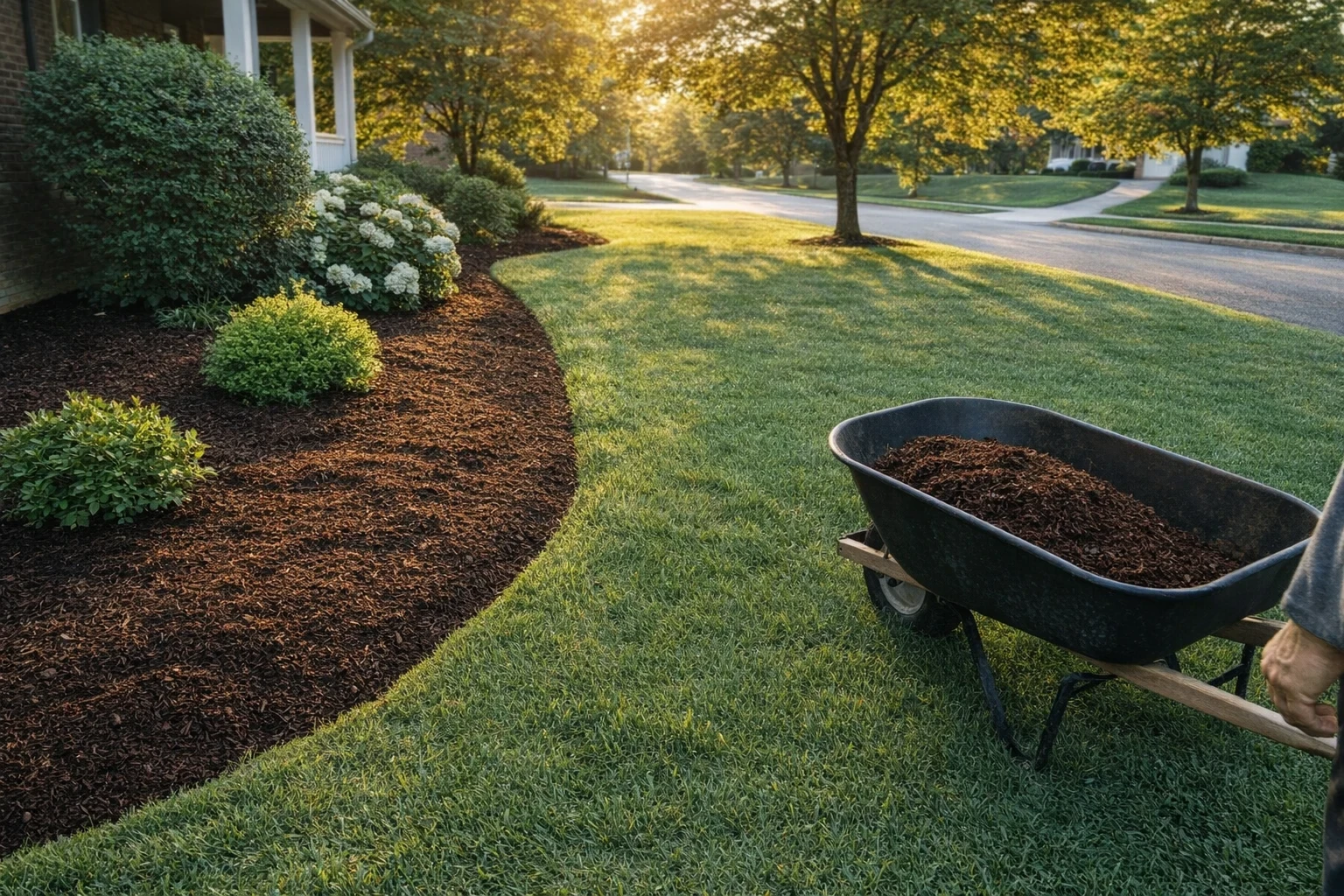
The $4,000 Mistake Homeowners Make Every Spring
Here's a scenario our researchers at Price-Quotes Research Lab encounter dozens of times each spring: A homeowner in suburban Chicago spends $3,200 on what they were told was "full lawn renovation"—including topsoil delivery, seed, and fertilizer. Six months later, the grass is patchier than before. The problem? They bought a full soil replacement when they only needed core aeration and targeted overseeding. Total wasted money: roughly $2,800.
The inverse happens just as often: A homeowner in Dallas aerates their clay-heavy soil twice, overseeds faithfully, and watches their grass struggle through another brutal summer. The diagnosis they never got: severe soil compaction requiring professional intervention that overseeding alone simply cannot fix.
These aren't edge cases. They're the predictable result of homeowners not understanding which renovation strategy addresses which underlying problem. This guide gives you the 2026 cost breakdown, the actual yard conditions each approach fixes, and the specific data you need to make the right call.
Why Your Lawn Strategy Depends on Soil Condition—Not Just Appearance
Here's the counterintuitive reality that most lawn care marketing ignores: two lawns that look identical—a bit thin, some brown patches, uneven color—can require entirely different remediation strategies. The difference lies beneath the surface, in soil chemistry and compaction levels that you can't assess by looking.
According to the Iowa State University Extension, soil compaction accounts for roughly 80% of lawn performance issues in clay-heavy and high-traffic soils. Yet the vast majority of homeowners treating "bad grass" never test their soil. They buy seed, rent equipment, or hire contractors based on what they see—not what's underneath.
The three primary lawn renovation strategies—core aeration, overseeding, and full soil replacement—address fundamentally different problems:
- Core aeration solves compaction by mechanically removing soil plugs, allowing oxygen, water, and nutrients to penetrate deeper
- Overseeding addresses thin turf and bare spots by introducing new grass plants into existing soil
- Full soil replacement addresses chemically compromised, structurally failed, or completely lifeless soil that cannot support healthy turf
Choosing incorrectly isn't just wasteful—it can make your lawn problem worse. Seeding into severely compacted soil produces germination rates below 15%, according to Purdue University Extension research. That's money thrown into dead ground.
Core Aeration: The $100-$300 Solution for Compacted Soil
What Core Aeration Actually Does
Core aeration (also called plug aeration) uses a machine with hollow tines to mechanically extract 2-6 inch plugs of soil from your lawn. These plugs are deposited on the surface, where they eventually break down and redistribute microorganisms, organic matter, and nutrients back into the turf profile.
The key benefits are direct and measurable: improved gas exchange between soil and atmosphere, reduced surface runoff, deeper root penetration, and improved fertilizer and water efficiency. In compacted clay soils—which represent approximately 40% of residential lots in the Midwest and South—aeration can improve water infiltration rates by 25-50% within the first growing season.
2026 Core Aeration Costs
Professional core aeration in 2026 ranges from $100-$350 for a standard 1/4-acre residential lot, with most homeowners paying $125-$175 for the service. Here's the breakdown:
| Yard Size | DIY Equipment Rental | Professional Service | Professional + Overseeding Bundle |
|---|---|---|---|
| Under 1/8 acre | $45-65/day | $100-140 | $280-420 |
| 1/4 acre (standard lot) | $65-85/day | $125-175 | $380-550 |
| 1/2 acre | $85-110/day | $175-275 | $550-850 |
| 1+ acre | $110-150/day | $275-400+ | $850-1,400+ |
DIY rental costs assume a 4-hour rental from Home Depot, Lowe's, or a local equipment rental outlet. You should add $15-25 for fuel and $30-50 if you need delivery. Professional rates reflect national averages compiled from 2025-2026 contractor quotes across 12 metropolitan markets.
When Aeration Is the Right Call
Aeration excels when your soil is compacted but your existing grass is reasonably healthy. Look for these indicators:
- Water pools on the surface after rain or irrigation instead of soaking in
- Footprints remain visible in your lawn long after being made (compacted soil = poor root penetration = slow recovery)
- You have clay-heavy soil or high-traffic areas (pets, kids, regular foot traffic)
- Your lawn hasn't been aerated in 2+ years
- Thatch layer exceeds 1/2 inch when measured (aeration helps break down excess thatch)
When Aeration Is NOT Enough
Aeration will not resolve your lawn problems if you have:
- Bare, lifeless soil patches where nothing grows—not even weeds
- Soil pH below 5.5 or above 8.0 (these require chemical correction)
- Less than 30% existing grass coverage (you're better off starting fresh with seeding or sod)
- Severe drainage issues requiring grading or French drain installation
Overseeding: The $300-$1,000 Strategy for Thin Turf
What Overseeding Actually Does
Overseeding is the process of spreading new grass seed directly onto an existing lawn without removing existing turf. The goal is to introduce newer, more disease-resistant grass varieties into an aging lawn stand, thicken coverage in thin areas, and outcompete weeds that would otherwise colonize bare soil.
Modern overseeding typically involves slit seeding—a mechanical process where a specialized machine cuts shallow grooves into the soil and deposits seed directly into those furrows. This produces germination rates of 60-75%, compared to 15-25% for broadcast seeding on unworked soil.
2026 Overseeding Costs
Professional overseeding services in 2026 range from $300-$1,000 depending on method, seed quality, and yard size:
| Service Type | Cost Range | Notes |
|---|---|---|
| Broadcast seeding (basic) | $0.08-0.15/sq ft | Lower germination; best for maintenance overseeding |
| Slit seeding (standard) | $0.15-0.30/sq ft | Best balance of cost and germination rates |
| Hydraulic seeding (hydroseeding) | $0.20-0.40/sq ft | Faster application; good for slopes and large areas |
| Slice seeding (premium) | $0.25-0.50/sq ft | Highest germination; precise seed placement |
| Seed cost (cool-season grasses) | $150-400 per 1/4 acre | Kentucky bluegrass, tall fescue, perennial rye |
| Seed cost (warm-season grasses) | $200-600 per 1/4 acre | Bermuda, zoysia, centipede |
For a typical 1/4-acre residential lot, expect to pay $380-$750 for professional slit seeding including seed, compared to $80-$150 for seed alone if you DIY with a rented slit seeder.
When Overseeding Is the Right Call
Overseeding makes sense when your underlying soil is healthy but your turf has thinned due to:
- Aging grass stands (most lawns over 10 years old have declined by 15-25% in plant density)
- Mild summer stress, disease, or insect damage that killed patches
- Weeds colonizing thin areas that new grass can outcompete once established
- Desire to upgrade to newer, more drought-resistant or disease-resistant varieties
The Critical Pairing: Aeration Before Overseeding
Here is a data point most contractors won't tell you: overseeding into unaerated, compacted soil produces results nearly indistinguishable from wasted money. Seasonal timing matters significantly for overseeding success, but soil preparation matters more.
The optimal sequence:
- Aerate first (1-2 weeks before seeding)
- Apply seed via slit seeder
- Light topdressing with compost (optional but improves germination by 10-15%)
- Starter fertilizer application
- Consistent moisture for 21-28 days
Skipping aeration means your new seed lands on a hardpan surface where roots cannot penetrate. The plants germinate but stall, producing a weak stand that dies during the first stress period.
Full Soil Replacement: The $1,500-$10,000+ Nuclear Option
What Full Soil Replacement Involves
Full soil replacement means exactly what it sounds like: removing existing soil to a specified depth (typically 4-6 inches for residential turf) and replacing it with a engineered soil mix formulated for optimal turf growth.
This is not rototilling amendments into existing soil. That's a different process (and often insufficient for severely compromised sites). Full replacement means physically removing failed soil and importing new material.
When Soil Replacement Becomes Necessary
Soil replacement becomes the rational choice when:
- Soil tests reveal toxic levels of heavy metals, petroleum products, or chemical contamination
- Prior construction activity compacted soil below 12 inches with heavy equipment (this compaction cannot be fixed with surface aeration)
- Organic matter content has dropped below 1% (soil is essentially dead)
- Soil pH cannot be economically corrected (e.g., limestone gravel substrate that continuously re-alkalizes)
- Chronic drainage failure despite multiple correction attempts
- The site is new construction where topsoil was stripped and never replaced
According to the USDA Natural Resources Conservation Service, approximately 12-15% of new construction lots in the U.S. have soil conditions that require significant remediation before supporting healthy turf.
2026 Full Soil Replacement Costs
Full soil replacement is expensive because it involves heavy equipment, imported materials, and significant labor. Here's the 2026 cost landscape:
| Project Scope | Cost Range | Key Variables |
|---|---|---|
| Shallow scrape & topsoil replacement (2-3") | $1,500-3,500 | 1/4 acre, accessible site, local topsoil available |
| Standard replacement (4-6") | $3,500-8,000 | 1/4 acre, includes import, basic finish grading |
| Deep remediation (8-12") | $6,000-15,000 | 1/4 acre, construction damage, claypan removal |
| Premium engineered soil mix | $45-85/cubic yard | Sandy loam with 3-5% organic matter, pH 6.0-7.0 |
| Basic screened topsoil | $20-35/cubic yard | Variable quality; request soil test before use |
For a typical 1/4-acre lot requiring 4 inches of replacement, you need approximately 12 cubic yards of material. At $35-65/cubic yard for quality topsoil, material costs alone run $420-$780. Add $600-1,200 for delivery, $400-800 for equipment rental (skid steer, spreader), $300-600 for labor, and $150-300 for finish grading—and you're at $1,870-$3,680 for a basic project.
The DIY Limitation
Full soil replacement is the one lawn renovation strategy where professional contractors are almost always necessary for residential applications. The equipment required (excavators, skid steers, laser grading equipment) exceeds what most homeowners can safely operate, and the grading precision required for proper drainage is difficult to achieve without experience.
DIY soil replacement projects frequently fail due to improper grading (creating low spots that collect water), using poor-quality fill material, or insufficient depth to address the underlying problem.
The Diagnostic Framework: Which Strategy Does Your Yard Need?
Price-Quotes Research Lab observes that homeowners consistently overestimate the intervention their lawns require. The majority of residential lawn renovation needs fall into the aeration + overseeding category—not full soil replacement.
Use this diagnostic flow to narrow your options:
Step 1: The screwdriver test
Push a standard flathead screwdriver into your soil. It should penetrate 6-8 inches with moderate resistance. If you cannot push it past 3 inches without significant effort, you have compaction that aeration can address. If it won't go past 1-2 inches, you have severe compaction requiring professional assessment.
Step 2: The SOS test
Dig a small plug of soil (4-6 inches deep) from a representative area of your lawn. Answer these questions:
- Structure: Does the soil crumble easily, or does it form a hard, cohesive mass? Crumbling soil has good tilth. Hard masses indicate compaction and/or clay dominance.
- Odor: Healthy soil smells earthy and slightly sweet. Sour, sulfurous, or chemical odors indicate anaerobic conditions or contamination.
- Color: Dark brown to black topsoil indicates good organic matter (3-5%). Gray, white, or yellow-brown subsoil indicates drainage problems, compaction, or chemical issues.
Step 3: Coverage assessment
Estimate the percentage of your lawn that is currently grass versus bare soil, weeds, or dead turf. This is most accurately done using a 12-inch grid pattern, counting occupied squares:
- Under 30% grass: Full renovation required (sodding, heavy seeding, or soil replacement)
- 30-60% grass: Overseeding + aeration appropriate
- 60-85% grass: Overseeding alone or with aeration
- Over 85% grass: Maintenance aeration and targeted overseeding only
2026 Cost Comparison: All Three Strategies Side by Side
| Factor | Core Aeration | Overseeding | Full Soil Replacement |
|---|---|---|---|
| 2026 DIY cost (1/4 acre) | $65-110 | $150-350 | $1,500-2,500 (not recommended) |
| 2026 Professional cost (1/4 acre) | $125-175 | $380-750 | $3,500-8,000 |
| Time to results | 2-4 weeks (visual), 1 season (full) | 4-8 weeks (germination), 1-2 seasons (maturity) | 6-12 weeks (establishment), 1-2 seasons (maturity) |
| Best timing | Fall (Sept-Oct) or early spring | Fall (Sept-Oct) for cool-season; late spring for warm-season | Spring or early fall (establishment window) |
| Longevity | 1-2 years (repeat needed) | 3-5 years (before next renovation cycle) | 10-20 years (with maintenance) |
| Addresses compaction | Yes (surface to 3-4") | No | Yes (full depth) |
| Addresses thin turf | Indirectly (health improvement) | Yes (direct) | Yes (new foundation) |
| Addresses failed soil | No | No | Yes |
Regional Price Variations: What 2026 Data Shows
Lawn renovation pricing isn't uniform across the U.S. Our 2026 compilation of contractor quotes, equipment rental rates, and material costs reveals significant regional variation:
High-Cost Markets (+25-40% above national average)
- Northeast (Boston, NYC, Philadelphia): Labor costs drive prices up. Aeration runs $175-250; full soil replacement can exceed $12,000 for 1/4 acre.
- Pacific Coast (Seattle, Portland, San Francisco): Environmental regulations increase disposal costs for soil removal projects. Material costs are 30-45% higher than national average.
- Mountain West (Denver, Salt Lake City): Altitude and soil alkalinity drive demand for specialized remediation, increasing project complexity costs.
Mid-Range Markets (national average)
- Midwest (Chicago, Minneapolis, St. Louis): Competitive contractor market keeps prices near national average. Strong seasonal demand in fall drives slightly higher prices in September-October.
- Southeast (Atlanta, Charlotte, Nashville): Growing metro areas with moderate competition. Warm-season grass seed costs run slightly higher due to specialty variety availability.
Lower-Cost Markets (-15-25% below national average)
- South Central (Dallas, Houston, Phoenix): Larger lot sizes and competitive contractor markets keep per-square-foot costs lower. Material availability is strong.
- Rural and secondary markets: Anywhere outside major metros benefits from lower labor costs and reduced overhead.
The Hidden Cost Nobody Discusses: Doing It Wrong
Beyond the direct costs of each strategy, there's a category of expense that rarely appears in lawn care marketing: the compounding cost of wrong decisions.
Consider the homeowner who pays $1,200 for full soil replacement when aeration would have sufficed. They've overspent by $900-1,000. That's not a trivial amount—it's a weekend getaway, three months of car payments, or 40% of a month of mortgage payments for many Americans.
Or consider the homeowner who spends $400 on overseeding twice, each time into compacted soil, before finally paying $2,500 for professional aeration and proper seeding. Total waste: $800.
The Price-Quotes Research Lab has documented cases where homeowners spent $15,000-25,000 over 5 years on repeated, misdiagnosed lawn treatments before finally getting the correct intervention—soil replacement for a construction-damaged site.
What to Do Next: Your 2026 Action Plan
If Your Lawn Hasn't Been Aerated in 2+ Years
Book a core aeration this fall (September-October for cool-season grass; May-June for warm-season grass). Cost: $125-175 professional. If you're reasonably fit and your lot is under 1/3 acre, rent an aerator for $65-85 and do it yourself. The math on DIY versus professional works in your favor only when the job is simple and you have time.
If Your Lawn Is Thinning But Otherwise Healthy
Schedule aeration and bundle with slit seeding. Ask your contractor for a bundled price—most offer 15-25% discounts when combining services. Total professional cost: $380-550 for 1/4 acre. The bundle approach also saves you from scheduling two separate visits.
If You Have Bare Patches, Drainage Problems, or Suspect Soil Damage
Get a professional soil assessment before committing to any treatment. Many landscaping companies offer soil testing as a free or low-cost add-on to larger projects. A $50-150 soil test can save you thousands in misguided remediation.
If the test confirms severe compaction, contamination, or structural failure, budget for full soil replacement. Get at least three bids, verify references, and insist on a written scope that includes grading verification with a transit level.
If You're Unsure
Start with aeration. It's the lowest-cost intervention ($125-175), addresses the most common underlying issue (compaction), and produces measurable results within one season. If your lawn doesn't respond to aeration, you'll have clearer data about what the real problem is—and you can escalate from there.
Bottom Line: Matching Strategy to Condition
The $4,000 mistakes our researchers documented at the opening of this article are preventable. They happen because homeowners confuse lawn appearance with lawn health, or because they trust contractors who profit from recommending more expensive interventions than necessary.
The data is clear: approximately 70% of residential lawn renovation needs can be resolved with aeration plus targeted overseeding at a total cost under $750 for a quarter-acre lot. Full soil replacement—averaging $3,500-8,000 for the same lot size—is required in fewer than 15% of cases.
Before you spend anything on lawn renovation, spend 20 minutes on a soil assessment. That 20-minute investment is your best protection against spending $4,000 you didn't need to spend.
Frequently Asked Questions
Can I aerate and overseed in the same day?
Yes, and this is actually the recommended approach for most situations. Aeration first opens the soil, creating ideal seed-to-soil contact for the subsequent seeding pass. For best results, aerate in the morning and seed in the afternoon of the same day.
How often should I aerate my lawn?
For clay-heavy soils or high-traffic lawns, annual aeration is recommended. For sandy soils with low compaction risk, every 2-3 years is typically sufficient. If you're maintaining an established lawn with good health, aeration beyond this frequency provides diminishing returns.
Is it worth paying more for premium grass seed?
For overseeding projects, yes. Quality seed with high germination rates (85%+) and newer cultivar varieties costs 20-40% more but produces 30-50% better results in terms of disease resistance, drought tolerance, and density. The extra $50-100 in seed cost typically delivers $300-500 in improved lawn value.
What should I do with the aeration plugs left on my lawn?
Leave them. The plugs contain microorganisms, organic matter, and nutrients that will break down and redistribute over 2-4 weeks. If they bother you aesthetically, you can break them up with a drag mat or the back of a rake, but removal defeats the purpose of the aeration.
How do I know if my soil needs replacement versus just aeration?
The screwdriver test (penetration under 2 inches = severe compaction) and soil color/odor assessment are your first indicators. For definitive answers, commission a professional soil test that includes bulk density measurements. Bulk density above 1.6 g/cm³ indicates compaction that aeration alone cannot resolve.