Landscaping boosts home value best projects for a big return in 2026
Landscaping boosts home value best projects for a big return in 2026
Published 2026-07-07 • Price-Quotes Research Lab Analysis
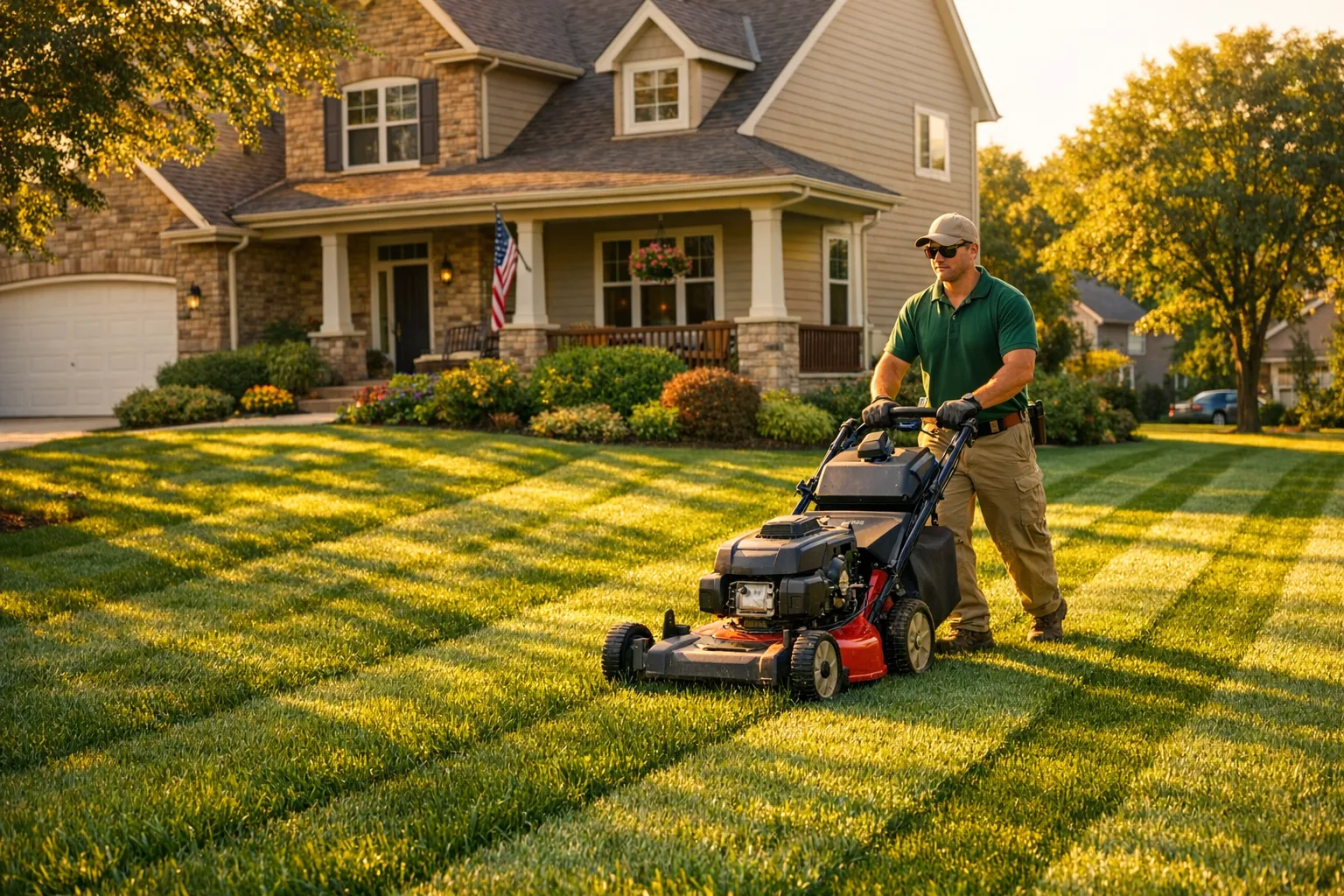
The $14,000 Decision Most Homeowners Get Wrong
Maria, a homeowner in Raleigh, North Carolina, got three bids for a full front-yard renovation: $9,200, $13,500, and $22,400. She chose the middle bid, financed it on a credit card at 24.99% APR, and paid $4,100 in interest by the time she sold the house four years later. Meanwhile, her neighbor financed the same project through a home equity loan at 7.75% APR and paid $1,050 in interest. The difference wasn't the contractor. It was the financing structure.
This is the gap most landscaping articles ignore: the math between how you pay for a project and whether it actually pays you back. In 2026, with APR rates finally stabilizing after two years of Fed rate adjustments, the financing choice can cost or save homeowners $2,000–$5,000 on a single project. And the ROI picture is more nuanced than most contractors admit.
Price-Quotes Research Lab observes that the average major landscaping project in 2026 costs between $13,000 and $18,000 nationally, yet fewer than 40% of homeowners comparison-shop financing before signing a contract. This article changes that.
Why Financing Landscaping Is Different From Financing a Kitchen
Home improvement financing advice usually focuses on kitchens and bathrooms because those projects have reliable, well-documented resale returns. Landscaping is different in three critical ways:
- ROI is front-loaded. Curb appeal improvements — new sod, fresh mulch, pruned foundation plantings — deliver their full value in the first 1–3 years. Deferred maintenance or overbuilding both destroy returns.
- Project types have wildly different returns. A $3,000 lawn installation can return 156% at resale. A $45,000 outdoor kitchen can return 55%. Financing the lawn makes financial sense. Financing the outdoor kitchen often doesn't.
- Financing terms vary more than for indoor projects. Contractor in-house financing, which is common in landscaping, frequently carries deferred-interest clauses that can double your effective cost if you miss a payment window.
Understanding these differences before you sign a contract is the single highest-value action most homeowners skip.
Your Landscaping Financing Options in 2026
Five financing structures are available for residential landscaping projects. Each has a different APR range, approval speed, and risk profile.
Personal Loans (Unsecured)
Personal loans are the most common landscaping financing method for projects under $15,000. They require no collateral, approval is based primarily on credit score and income, and funds arrive within 1–7 business days of approval.
In 2026, national average APRs for personal loans range from 8.5% to 13.5% for borrowers with FICO scores above 720, according to Federal Reserve data. Borrowers with scores between 660–719 typically see rates of 12% to 18%. Rates above 720 FICO can access the lowest tier, with some credit unions offering secured personal loans at 6.5% to 9%.
The key advantage: personal loans have fixed terms (typically 24–72 months) with no prepayment penalties. You know exactly what you owe each month.
Home Equity Loans (HEL) and Home Equity Lines of Credit (HELOC)
For homeowners with at least 20% equity in their property, HELs and HELOCs offer the lowest available rates on home improvement financing. In 2026, HEL rates average 7.5% to 9.5%; HELOCs typically run 7.0% to 9.0% (variable rate, adjusting with the prime rate).
A home equity loan provides a lump sum at a fixed rate. A HELOC functions like a credit card — you draw funds as needed during a draw period (usually 5–10 years), then repay over a 10–20 year period.
The catch: both require an appraisal, title search, and closing costs (typically 2%–5% of the loan amount). For a $100,000 home with $40,000 in equity, closing costs on a $15,000 HEL could run $300–$750. Some lenders waive fees for loans above a threshold.
For homeowners planning to stay in the property for 7+ years, a HEL or HELOC is almost always the cheapest option. Price-Quotes.com maintains a lender comparison tool that includes HELOC rates from credit unions and regional banks.
Contractor In-House Financing
Many landscaping contractors offer financing through third-party lenders or their own credit arrangements. This is the most convenient option — you sign one document and the contractor handles everything — but it is rarely the cheapest.
Contractor financing APRs in 2026 typically range from 9.99% to 17.99%, with some contractors advertising "same-as-cash" deferred-interest plans. Deferred-interest plans charge 0% APR for a promotional period (often 6–18 months), then retroactively apply the full APR (sometimes 26.99%) to the original balance if the promotional period ends before the loan is paid off.
This is the most dangerous financing structure in landscaping. A homeowner who borrows $12,000 at "0% for 12 months" and pays it off in 13 months can be charged interest on the full $12,000 from day one — turning a $12,000 project into a $15,000+ obligation.
Credit Cards (Including 0% APR Promotional Offers)
For projects under $5,000, a credit card with a 0% introductory APR offer can work — but only if you pay the balance in full before the promotional period ends. The average promotional period in 2026 is 12–18 months.
Standard credit card APRs (for balances that carry over after the promotional period) range from 20% to 28%, making them the most expensive option for carried balances. Use them only if you have a concrete payoff plan.
Government and Utility Programs
Some municipalities offer low-interest or grant programs for water-efficient landscaping, tree planting, and rain garden installation. These programs vary by city and county. The EPA's Watersense program lists rebate programs by state, and many local water utilities offer rebates of $100–$500 for switching to drought-tolerant plants. These don't cover full project costs but can reduce the amount you need to finance.
Real Monthly Payment Scenarios for 2026 Landscaping Projects
Numbers make this concrete. Here are three scenarios showing actual monthly payments and total interest costs across financing options for a $10,000 landscaping project (a mid-range front-yard renovation including sod, planting beds, mulch, and landscape lighting).
| Financing Option | APR | Term | Monthly Payment | Total Interest | Total Cost |
|---|---|---|---|---|---|
| Home Equity Loan | 8.0% | 60 months | $202.76 | $2,165.60 | $12,165.60 |
| Personal Loan (Good Credit) | 10.5% | 60 months | $215.37 | $2,922.20 | $12,922.20 |
| Contractor Financing | 14.99% | 60 months | $233.42 | $4,005.20 | $14,005.20 |
| Credit Card (Post-Promo) | 24.99% | 60 months | $281.58 | $6,894.80 | $16,894.80 |
The spread between the cheapest and most expensive option on a $10,000 project is $4,729.20 in total cost — nearly half the original project cost in extra interest. On a $15,000 patio project, that spread grows to over $7,000.
Price-Quotes Research Lab observes that this financing cost gap is larger than most regional price differences between landscaping contractors. Choosing a 7% HELOC over contractor financing saves more money than choosing the second-lowest bid over the highest bid.
Which Landscaping Projects Actually Return 150% or More?
The landscaping industry loves to cite the "100%–200% ROI" figure for landscaping generally. This is misleading. The return varies enormously by project type, and the 150%+ figures apply to a specific subset of projects.
Projects With ROI of 150% or Higher
According to the 2025–2026 Remodeling Impact Report from the National Association of Realtors (NAR), these specific landscaping investments consistently deliver the highest returns:
- Landscape lighting installation: 150%–200% ROI. A $3,000–$5,000 lighting system transforms curb appeal at night and is one of the highest-return improvements per dollar spent. It also extends outdoor living hours and improves home security — features buyers actively seek.
- Lawn installation (sod or hydroseed): 100%–156% ROI. A full lawn replacement (removing dead turf, grading, installing sod) costs $3,500–$8,000 nationally and consistently ranks among the top 5 exterior ROI projects in NAR surveys. In the Southeast and Southwest, where lawn replacement addresses genuine curb-appeal deficiencies, returns can exceed 160%.
- Foundation plantings (shrubs, small trees): 100%–130% ROI. Mature foundation plantings frame a home and create visual balance. The sweet spot is 3–5 mature shrubs and 2–3 specimen trees. Cost: $1,500–$4,000. Returns are highest in suburban settings where first impressions drive buyer decisions.
- Mulching and bed maintenance: 100%–125% ROI. Fresh mulch and defined planting beds cost $800–$2,500 and deliver an immediate visual refresh. This is the highest-return-per-dollar project in landscaping.
Projects With Moderate ROI (65%–85%)
- Patio installation (poured concrete or pavers): 65%–80% ROI. A 400-square-foot patio costs $4,000–$12,000 depending on materials. Returns are higher in regions with mild climates (Southeast, Southwest, California) where outdoor living is a year-round expectation.
- In-ground pool: 50%–70% ROI. Pools have highly regional returns. In Phoenix, Tucson, and South Florida, they return 65%–80%. In northern climates, they often return below 50% after accounting for fencing, maintenance equipment, and utility costs.
- Deck construction (wood or composite): 65%–80% ROI. A 400-square-foot wood deck costs $6,000–$12,000; composite runs $12,000–$24,000. The higher material cost of composite decking does not proportionally increase ROI.
Projects That Frequently Underperform
- Outdoor kitchens: 50%–65% ROI. A built-in grill, counter, and refrigerator can cost $15,000–$45,000. Most buyers view outdoor kitchens as a luxury amenity rather than a necessity, and the installed cost rarely recoups at resale. Exception: in markets where comparable homes all have outdoor kitchens, the ROI approaches parity as a competitive necessity.
- Full landscape renovation with high-end materials: 55%–75% ROI. Overbuilding relative to neighborhood norms is the single most common ROI mistake in landscaping. If the average home on your street has $5,000 in landscaping, a $35,000 renovation will not return $35,000 at resale.
Regional Cost Variations: What $10,000 Buys in Different Markets
Landscaping costs vary by 20%–35% across U.S. regions, which affects both the project scope and the financing amount. Based on 2026 cost data from multiple regional contractor networks:
| Region | Labor Cost (avg/hr) | Sod Install (per sq ft) | Paver Patio (per sq ft) | Planting Bed (per sq ft) | $10K Project Scope |
|---|---|---|---|---|---|
| Southeast (FL, GA, NC, SC) | $35–$55 | $1.50–$2.50 | $12–$18 | $8–$14 | Full front yard: sod, beds, mulch, lighting |
| Southwest (AZ, TX, NM) | $40–$60 | $1.75–$2.75 | $14–$20 | $9–$15 | Drought-tolerant redesign: native plants, drip irrigation, decomposed granite |
| Midwest (IL, OH, MI, IN) | $45–$65 | $1.75–$2.75 | $13–$19 | $9–$15 | Full renovation: sod, planting beds, retaining wall, mulch |
| Northeast (NY, NJ, MA, CT) | $55–$85 | $2.25–$3.50 | $18–$28 | $12–$20 | Moderate scope: lawn restoration, foundation plantings, lighting |
| West (CA, OR, WA, CO) | $55–$90 | $2.00–$3.25 | $16–$26 | $11–$18 | Native plant redesign: water-wise plants, mulch, minimal lawn |
For homeowners in high-cost regions (Northeast, West Coast), the same $10,000 financing commitment buys a smaller physical scope of work. This makes project selection even more critical — every dollar should go toward the highest-return elements rather than discretionary add-ons.
How Financing Affects Your Actual ROI
Here's the calculation most homeowners skip: your financing cost reduces your net ROI. If you finance a $10,000 project at 14.99% over 5 years, you pay $4,005 in interest. If that project returns $13,000 at resale (130% gross ROI), your net ROI drops to 90% after financing costs.
Conversely, financing a project with 150% gross ROI at 8% HELOC rates still leaves you with a net return above 140%. The financing rate matters, but the project type matters more.
Three factors determine whether landscaping financing makes financial sense:
- Project type: Only projects with gross ROI above 120% should be financed over more than 24 months. Lower-ROI projects should be paid in cash or deferred until savings are available.
- Time in home: If you plan to sell within 3 years, financing costs eat into returns significantly. If you plan to stay 7+ years, a HELOC at 7.5% is almost always the right choice.
- Scope discipline: Financed projects tend to be 20%–30% more expensive than cash projects because the payment structure normalizes larger expenditures. Set a hard budget before getting financing — not after.
What to Do Next
Before you sign a landscaping contract, run through this checklist:
- Get bids from at least three contractors. The national average spread between the lowest and highest bid for the same scope is 25%–40%. Use our complete 2026 landscaping price guide to evaluate whether bids are in range.
- Identify your project type and expected ROI. If you're doing lawn installation, lighting, or foundation plantings, financing makes strong mathematical sense. If you're building an outdoor kitchen, consider paying cash or reducing scope.
- Check your credit score and get rate quotes from at least three lenders. Personal loan rate quotes are free and take 5 minutes. A 2% APR difference on a $12,000 loan over 5 years is $600 in savings.
- Compare lender offers to contractor financing. If the contractor's financing rate is more than 2% higher than a personal loan or HELOC rate, take the external financing.
- Factor in regional costs. If you're in the Northeast or West, native plant strategies can reduce project costs by 15%–25% while maintaining high ROI — meaning you finance less and keep more at resale.
- Calculate your net ROI before signing. Gross ROI minus financing costs equals your real return. If that number is below 80%, reconsider the project scope or timing.
Financing landscaping is not inherently good or bad. The math is only bad when homeowners finance the wrong projects at the wrong rates. In 2026, with rates stabilized and ROI data clearly favoring a specific subset of landscaping investments, the homeowners who do the financing homework will come out thousands of dollars ahead at closing time.