Landscaping Labor Costs 2026: Hourly Rates, Markup Structures, and What Actually Drives Your Total Bill
Landscaping Labor Costs 2026: Hourly Rates, Markup Structures, and What Actually Drives Your Total Bill
Published 2026-06-23 • Price-Quotes Research Lab Analysis
The $47 Receipt That Changed How One Homeowner Thinks About Landscaping
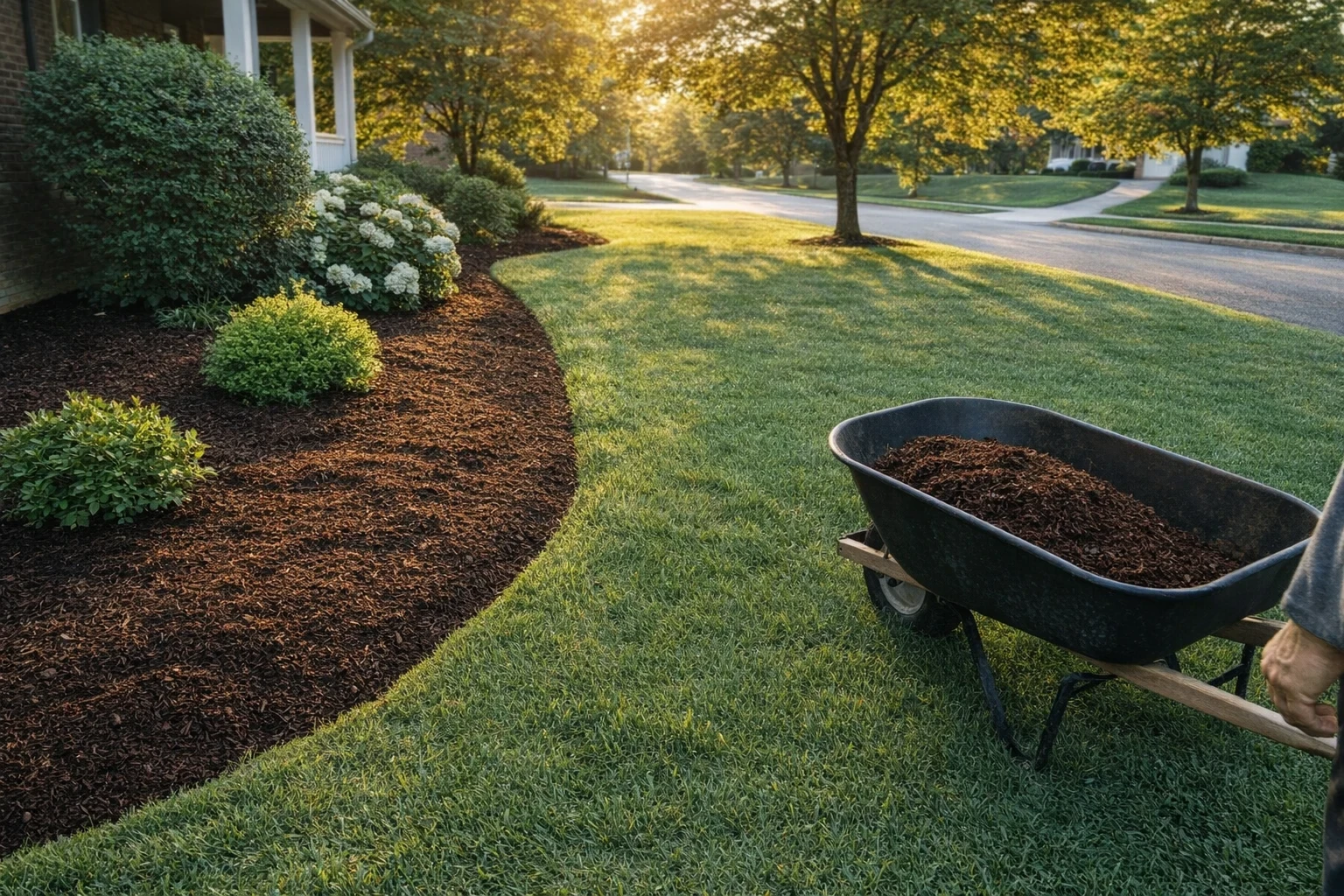
Last spring, Marcus Delgado in suburban Denver received a bill for $3,200 to have 12 shrubs planted in his front yard. The crew of three arrived at 8 a.m. and finished by 2 p.m. That's six hours of work, or roughly $47 per person per hour. Delgado thought he'd been overcharged. He hadn't—he'd simply never looked at how landscaping labor pricing actually works.
The landscaping industry in 2026 operates on a pricing structure that surprises most consumers. Labor typically represents 40% to 65% of a project's total cost, yet most homeowners focus almost exclusively on material prices. This article pulls back that curtain with specific 2026 data, explaining exactly how labor rates are set, why markup structures exist, and what factors genuinely drive your final bill up or down.
Price-Quotes Research Lab observes that landscaping labor costs have increased approximately 12% to 18% annually since 2023, driven by fuel costs, equipment depreciation, insurance premiums, and a persistent shortage of skilled workers willing to do physically demanding outdoor work in variable weather conditions.
Understanding Landscaping Hourly Rates in 2026
The baseline number most homeowners want is simple: what does landscaping labor cost per hour? The answer requires context, because "landscaping" encompasses roles ranging from an unlicensed teenager with a push mower to a licensed arborist with specialized climbing certification.
Rate Ranges by Worker Type
For basic maintenance work—mowing, edging, blowing—2026 rates in most U.S. metropolitan areas run $25 to $45 per hour per worker. Crew leaders with some experience command $35 to $55 per hour. Skilled tradespeople handling irrigation repair, paver installation, or tree work typically charge $45 to $85 per hour.
Licensed contractors carry different rate structures. A licensed landscape contractor in California, Florida, or the Northeast typically bills at $65 to $120 per hour for labor, with the higher end reflecting workers with formal horticultural training, irrigation certification, or pesticide applicator licenses.
These numbers represent billable rates—what the company charges—not take-home pay. The actual worker typically receives 50% to 65% of the billed rate after accounting for employer taxes, insurance, equipment, training, and company overhead.
Regional Variation in Labor Rates
Geography dramatically affects landscaping labor costs. The same two-person crew installing 200 square feet of sod will quote prices that differ by 40% to 60% depending on metro area. For detailed regional breakdowns, see our analysis of how location affects landscaping costs.
High-cost regions include the San Francisco Bay Area, New York City metro, Boston, and Seattle, where landscaping labor rates average $75 to $125 per hour for skilled workers. Mid-range markets like Phoenix, Denver, Austin, and Charlotte see rates of $55 to $85 per hour. Rural areas and lower-cost metros in the Midwest and South typically range from $40 to $65 per hour.
These regional differences reflect local cost of living, licensing requirements, union presence in some markets, and competition density. A saturated market with many landscaping companies tends to moderate prices; a market with few qualified contractors sees premium pricing.
The Markup Structure: Why Your $500 Material Order Becomes a $1,400 Invoice
Contractors don't simply charge for time and materials. The pricing structure involves multiple markup layers that, combined, can transform a $500 material purchase into a $1,400 line item on your invoice.
Material Markup: The Standard 15% to 35% Add-On
Most landscaping contractors apply a markup to materials they purchase and deliver to your property. This markup serves multiple purposes: covering the time and fuel for pickup or delivery, compensating for the cost of maintaining inventory, and offsetting the financial risk of materials that arrive damaged or prove incorrect for the job.
Standard material markup ranges from 15% to 35%, depending on project size and contractor business model. A small contractor with a pickup truck charges closer to 35% because each material run requires a dedicated trip. A larger company with established supplier accounts and bulk delivery arrangements may charge 15% to 20%.
Some contractors operate on a cost-plus model, charging exactly their material cost plus a flat 10% to 15% handling fee. Others build material costs into their flat-rate bids, meaning you're not paying markup explicitly—you're paying a total price that includes it.
Labor Markup: The Overhead Multiplier
When a contractor quotes you $65 per hour for labor, that number doesn't represent the worker's wage multiplied by hours worked. Instead, it incorporates what's called the labor markup or overhead multiplier.
The typical multiplier ranges from 2.5 to 3.5 times the worker's base wage. If a crew member earns $22 per hour in take-home pay, the contractor's true labor cost (including employer taxes, workers' compensation insurance, general liability insurance, vehicle costs, tools, training, and benefits) might reach $38 to $45 per hour. Multiplying that by a 2.5 to 3.5 factor yields the $65 to $120 per hour billing rate.
This multiplier accounts for business overhead: office staff, advertising, licensing fees, bonding, insurance, equipment depreciation, truck maintenance, and the profit margin necessary for business survival and reinvestment.
Equipment and Specialty Tool Charges
Many landscaping jobs require equipment beyond hand tools: skid steers, mini excavators, stump grinders, powered tillers, concrete mixers, or specialized planting equipment. Contractors typically charge for equipment in one of three ways:
- Hourly equipment rental added to the labor invoice, typically $50 to $150 per hour depending on machine size
- Flat equipment fee built into the project bid, covering the estimated equipment hours
- Included in labor rate where equipment costs are absorbed into the hourly billing rate
For projects involving tree work, equipment charges can represent 25% to 40% of the total invoice. Our tree removal cost analysis provides detailed breakdowns of equipment-specific pricing.
Pricing Models: Hourly vs. Flat Rate vs. Cost-Plus
Different contractors use different pricing models, and understanding these structures helps you evaluate whether a bid is reasonable.
Hourly Rate Pricing
Under hourly pricing, you pay a set rate for each hour of labor plus materials at cost (or with markup). This model works best for jobs with uncertain scope—repair work where you don't know what's wrong until work begins, or maintenance contracts with variable task lists.
The risk for homeowners is scope creep. A contractor working hourly has reduced incentive to work efficiently, because more hours mean more revenue. Reputable contractors mitigate this by providing time estimates and checking in before exceeding estimates, but the incentive structure exists.
Flat Rate Pricing
Flat rate pricing offers a single total price for a defined scope of work. The contractor assumes efficiency risk—if the job takes longer than expected, the contractor absorbs the cost. If it takes less time, the contractor profits.
This model benefits homeowners because you know your total cost upfront and the contractor is incentivized to work efficiently. However, it requires precise scope definition. If you ask for "clean up the back yard" versus "remove 15 cubic yards of dead vegetation, re-grade the drainage issue in the northwest corner, and install erosion matting," the flat rate quotes will differ substantially.
Cost-Plus Pricing
Cost-plus pricing involves the contractor's actual costs plus a fixed percentage markup. This model is common in commercial landscaping and large residential projects where homeowners want full transparency. You receive invoices showing exactly what was spent on labor, materials, and equipment, plus the contractor's agreed-upon margin (typically 15% to 25%).
The advantage is transparency and fairness—the contractor profits regardless of efficiency. The disadvantage is uncertainty—you don't know your final cost until the project concludes.
What Actually Drives Your Total Bill
Beyond labor rates and markup structures, specific factors determine whether your landscaping project costs $2,000 or $12,000 for seemingly similar work.
Site Conditions and Access
A flat, accessible yard with good soil allows crews to work quickly. A sloped site, poor drainage, limited access points, or contaminated soil dramatically increases labor time and equipment requirements.
Contractors assess site conditions during the estimate visit. They note:
- Access width: Can a wheelbarrow reach all areas, or must materials be hand-carried 100 feet?
- Slope and grade: Steep slopes require more time and safety precautions
- Soil conditions: Rocky, clay-heavy, or sandy soil slows excavation and planting
- Existing infrastructure: Underground utilities, irrigation lines, or drainage systems that must be avoided
- Deck height and retaining walls: Elevation changes require more labor-intensive installation
A project requiring the same square footage of paver patio might cost $4,000 on an accessible flat lot or $8,500 on a sloped lot requiring retaining walls, extensive grading, and difficult material transport.
Project Complexity and Design Detail
Simple rectangular layouts require less labor than complex curved designs. A straight-edged planting bed takes half the time to edge and mulch compared to an organic, curved bed of equivalent area.
Similarly, projects with many different plant species, varied material types, or intricate patterns (herringbone paver patterns, mosaic stone work, elaborate water features) require more skilled labor hours than straightforward installations.
Season and Timing
Landscaping follows seasonal demand patterns that affect pricing. Spring (April through June) represents peak demand in most U.S. regions, when homeowners want their yards ready for summer. During peak season, contractors are busier and may charge premium rates or prioritize higher-paying clients.
Late fall and winter (November through February) often offer better pricing availability, as demand drops and contractors seek to fill schedules. However, some work cannot be performed during frozen ground or extreme heat, limiting the off-season window.
Emergency or short-notice scheduling commands premium pricing—sometimes 25% to 50% above standard rates for work scheduled within one week.
Material Selection
Material costs vary dramatically based on choices. Native plants suitable for regional climate typically cost $8 to $25 per gallon-sized container. Specialty ornamentals, imported species, or oversized specimen plants can cost $75 to $300 or more each.
Similarly, basic gravel or crushed rock costs $35 to $60 per ton, while imported flagstone runs $15 to $35 per square foot. A patio using basic concrete pavers might cost $12 to $18 per square foot in materials, while the same size using imported natural stone costs $25 to $55 per square foot.
Breaking Down a Real Project: What $5,000 Actually Covers
To make these abstract numbers concrete, consider a real 2026 project: installing a 400-square-foot paver patio with basic seating wall.
| Cost Category | Amount | Percentage | Notes |
|---|---|---|---|
| Site preparation and grading | $650 | 13% | 4 hours labor, equipment rental |
| Base material (gravel, sand) | $480 | 9.6% | Materials + 20% markup |
| Paver materials | $1,200 | 24% | 400 SF at $3/SF material cost |
| Seating wall materials | $800 | 16% | Block, caps, adhesive |
| Labor - paver installation | $1,200 | 24% | 16 hours at $75/hour billed rate |
| Labor - wall construction | $400 | 8% | 5.3 hours at $75/hour billed rate |
| Equipment and tools | $150 | 3% | Plate compactor, saw, mixer |
| Transportation and overhead | $120 | 2.4% | Fuel, vehicle, admin allocation |
| TOTAL | $5,000 | 100% |
In this example, labor represents 32% of the total cost, materials represent 50%, and equipment/overhead represents 18%. This is a relatively labor-light project; intensive planting or demolition work would shift the percentage toward labor.
Hidden Costs and Fee Structures to Watch
Several costs commonly surprise homeowners who haven't received detailed bids.
Demolition and Disposal Fees
Removing existing hardscaping, large plants, or structures generates debris that requires disposal. Dumpster rental or debris removal fees typically range from $300 to $800 depending on volume and local disposal costs. Some contractors include this in their bid; others quote it as an add-on.
Soil Amendment and Replacement
If your existing soil is poor (common in new construction areas where topsoil was stripped), plants may require ammended soil or soil replacement. Amending poor soil with compost and nutrients adds $200 to $600 depending on area size.
Permit and Inspection Fees
Many municipalities require permits for drainage work, retaining walls over a certain height, irrigation system installation, or any work that alters grading. Permit fees range from $75 to $500 or more depending on jurisdiction and project scope. Our landscape lighting installation guide covers permit considerations for electrical work specifically.
Markup on Subcontractor Work
If your project requires an electrician, plumber, or other licensed tradesperson, the general landscaping contractor typically marks up their subcontractor costs by 10% to 20%. This covers coordination, scheduling, and warranty responsibility for the subcontracted work.
How to Evaluate Landscaping Bids Effectively
Receiving multiple bids is standard practice, but comparing bids requires understanding what's included.
Bid Apples-to-Apples Checklist
Before comparing prices, confirm each bid includes:
- Detailed scope of work with specific measurements
- Material specifications (brand, grade, size)
- Labor hours or crew size estimate
- Equipment included or excluded
- Site preparation specifics
- Cleanup and debris removal
- Warranty or guarantee terms
- Payment schedule
- Start and completion timeline
A bid of $4,500 that excludes site preparation and debris removal is not cheaper than a $5,200 bid that includes both.
Red Flags in Landscaping Bids
Watch for these warning signs:
- Vague scope descriptions: "Prepare site and install landscaping" without specifics
- No material specifications: "Plants" instead of specific species and sizes
- Cash discount incentives: Contractors offering 5% to 10% discounts for cash payment are typically evading taxes—this also means no recourse if work is defective
- Unusually low bids: A bid 30% below other contractors suggests corners will be cut
- No insurance mention: Verify the contractor carries general liability and workers' compensation
- Full payment upfront: Reputable contractors typically request 25% to 33% deposit, with balance due upon completion
Negotiating Landscaping Costs
Landscaping pricing has more flexibility than most homeowners realize. Several legitimate strategies can reduce costs without sacrificing quality.
Off-Season Scheduling
Booking projects for November through February (in most climates) often yields 10% to 20% pricing reductions as contractors seek to fill slow periods. Spring scheduling commands premium pricing; winter scheduling often negotiates well.
Bundling Work
Contractors prefer larger projects over smaller ones because setup and mobilization costs spread across more revenue. If you have multiple landscaping needs, bundling them into one project often reduces the per-project cost.
Material Selection Flexibility
Contractors often have preferred suppliers and specific products they quote. Asking if alternatives exist—and being willing to accept slightly different materials—can reduce costs. Native plants, locally-sourced materials, and standard sizes typically cost less than specialty orders.
Providing Site Access
If you can handle some preparatory work yourself—clearing debris, basic grading, removing existing plants—you reduce the contractor's labor hours. Some contractors will discount their bid if you handle preparatory work, though you must complete this work to the contractor's specifications.
What to Do Next
Understanding landscaping labor costs prepares you to make informed decisions, but the next step is action.
- Define your project scope precisely before requesting bids. Measure areas, note existing conditions, and write down specific goals.
- Request at least three detailed bids from licensed contractors. Verify licensing through your state contractor board and request proof of insurance.
- Ask specific questions about labor rates, markup percentages, and equipment charges. A reputable contractor will explain their pricing structure.
- Compare bids on equal scope using a spreadsheet that breaks down labor, materials, equipment, and overhead separately.
- Consider timing strategically. If your project is flexible, ask contractors about off-season pricing.
- Get everything in writing. Verbal agreements are unenforceable; detailed written contracts protect both parties.
For more specific cost data on individual landscaping projects, explore our detailed guides on tree removal costs, landscape lighting installation, and regional cost variations.
Landscaping is an investment in your property and quality of life. Understanding the labor cost structure helps you evaluate bids intelligently, avoid overcharges, and ensure you're paying for actual value rather than contractor inefficiency or hidden margins. The $47 per hour that seemed excessive to Marcus Delgado was actually a reasonable rate for skilled work performed safely and correctly—the real lesson is that knowing the numbers changes the conversation from suspicion to informed partnership.
For additional pricing research and consumer guidance, visit Price-Quotes Research Lab for ongoing coverage of home service costs.