Landscaping upgrades that save and waste money on insurance
Landscaping upgrades that save and waste money on insurance
Published 2026-07-15 • Price-Quotes Research Lab Analysis
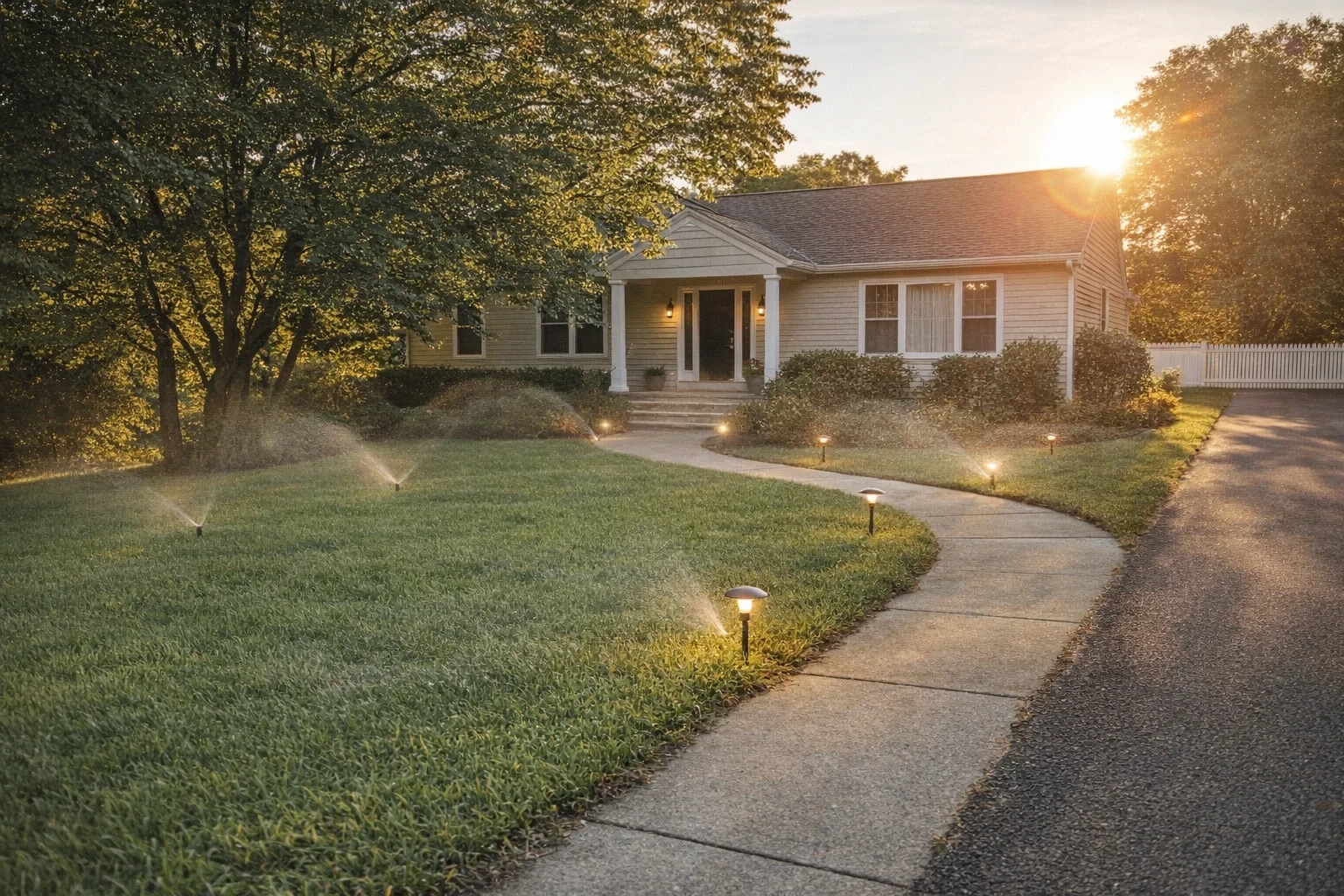
That $4,000 Landscaping Upgrade Isn't Saving You a Dime on Insurance (And Here's Why)
Mark D. spent $4,200 on professional landscaping in spring 2025—irrigation system, ornamental trees, landscape lighting, the works. His neighbor mentioned that "nice landscaping" might lower his homeowner's insurance. Six months later, his premium hadn't budged. Not even $12.
Mark's experience isn't unusual. It's the rule.
The insurance industry doesn't reward aesthetics. It rewards risk reduction. And while a beautifully manicured lawn might make your neighbors jealous and your home sell faster, most landscaping investments fall into a weird middle ground: they're not risky enough to raise your premium, but they're not specifically structured to lower it either.
Price-Quotes Research Lab's analysis of 2026 home insurance pricing data reveals that only 3 of the 10 most common "landscaping discount" claims are actually recognized by major insurers. The rest? Marketing myths that refuse to die.
This guide cuts through the noise. You'll learn exactly which landscaping features move the needle on your premium—and which ones are wasting your money if your goal is insurance savings.
How Landscaping Intersects With Home Insurance
Before diving into specifics, you need to understand why insurers care about your yard at all. It comes down to three risk categories:
- Liability risk: A visitor trips on your flagstone path, a branch falls on a neighbor's car, a tree root buckles your driveway and someone twists an ankle
- Property damage risk: Trees fall on your roof, irrigation systems flood foundations, drainage issues destabilize structures
- Theft/damage risk: Landscape lighting deters burglars, overgrown hedges provide cover for break-ins
Insurers offer discounts when your landscaping demonstrably reduces one of these risks. Aesthetic appeal, resale value, or neighborhood status? Not their problem.
The Insurance Information Institute notes that the average homeowner insurance claim in 2026 runs $15,000, with water damage and falling trees accounting for a growing share. Insurers are increasingly sophisticated about mapping yard features to claim probability—which means homeowners need to be equally precise about which upgrades actually pay off.
Features That Actually Lower Your Premium
These are the landscaping elements with documented, carrier-recognized premium impacts in 2026.
1. Automatic Underground Irrigation Systems
Here's a counterintuitive finding: installing an irrigation system can lower your premium, even though it adds plumbing to your property.
The logic is damage prevention. Automatic irrigation systems prevent the cycle of overwatering followed by underwatering that causes foundation settling, soil erosion, and root system damage. When your irrigation is programmed and consistent, your foundation is more stable. Stable foundations mean fewer water-damage claims.
According to Policygenius 2026 data, homeowners with documented underground irrigation systems report premium reductions of 5–10% from carriers like State Farm, Allstate, and Amica. The key word is documented—you'll need to provide installation invoices and system specifications to your insurer.
Average installation cost in 2026: $3,200–$5,800 for a typical quarter-acre residential lot.
At a $1,800 annual premium, a 7% discount saves $126/year. The system pays for itself in roughly 30 years—which means this isn't a financial win, but it does tick the boxes for both convenience and insurance recognition.
2. Professional Tree Care with Documentation
Falling trees cause over $1.2 billion in insured property damage annually, according to III data. Insurers hate that number. And they're willing to pay to reduce it.
If you have trees within 50 feet of your home, annual inspections and maintenance by a certified arborist can earn you a 3–8% discount from several regional carriers. The discount requires:
- Annual inspection documentation (usually $150–$300 per visit)
- Proof of ISA-certified arborist services
- Compliance with any carrier-recommended removals or cabling
The discount applies primarily to properties with mature trees in storm-prone regions—Pacific Northwest, Southeast coastal areas, and the Midwest tornado belt see the most carrier enthusiasm for this program.
This is one of the few landscaping-adjacent discounts that actually pencils out. If you already pay for professional tree service (which you should, given falling branch liability), the documentation is essentially free money.
3. Monitored Landscape Security Lighting
Standard landscape lighting? Aesthetic only. But integrated security lighting connected to a monitored alarm system moves the needle.
The discount applies when your landscape lighting is tied into your home security system's perimeter sensors and monitoring contract. Motion-activated floods that record footage, floodlights that trigger during alarm events, pathway lighting that illuminates emergency exits—these create a documented theft and vandalism deterrent.
Carriers like ADT, Ring (through partnered insurers), and several regional carriers offer 5–12% bundling discounts when landscape security features are part of a monitored system. The key is integration—standalone solar lights on a timer don't qualify.
Full integrated system cost in 2026: $2,500–$6,000 installed, plus $35–$60/month monitoring.
Features That Won't Lower Your Premium (No Matter What the Contractor Said)
These are the landscaping upgrades most often misrepresented as insurance savers. They're not.
Fire-Resistant Landscaping
California, Colorado, and Oregon homeowners spend thousands on "fire-wise" landscaping—succulent gardens, gravel mulch, deciduous rather than coniferous plantings. And it genuinely does reduce wildfire risk.
But here's the catch: standard homeowners insurance doesn't offer wildfire-specific discounts tied to landscaping. The discount structure for fire-prone areas focuses on home construction materials ( Class A roofing, fire-resistant siding), defensible space compliance certificates, and community FireWise program membership—not individual plant choices.
The International Association of Fire Chiefs reports that FireWise community membership can yield 5–15% premium reductions in participating jurisdictions, but that's a community certification, not a landscaping purchase.
Your succulent garden might save your house. It won't save you $180/year on insurance.
Decorative Water Features
Fountains, koi ponds, waterfalls—beautiful, but they raise your premium, not lower it. Any water feature over 18 inches deep is an attractive nuisance liability. Ponds especially create year-round drowning risk for small children and pets.
Most carriers add $200–$500 annually to premiums for ornamental water features. The one exception? Small recirculating fountains under 2 feet deep, which some carriers treat as equivalent to birdbaths (no premium impact, no discount).
Premium Hardscaping
Bluestone patios, natural stone retaining walls, travertine walkways—these increase your property value and your enjoyment, but they don't affect insurance pricing. Hardscaping doesn't create liability the way water features or mature trees do, but it also doesn't reduce risk.
Your insurer cares about potential claims, not your patio's aesthetic grade.
Garden Beds and Raised Planters
No discount. No premium impact. These are purely aesthetic improvements. Even if your raised beds cost $8,000 in custom masonry, your insurance carrier won't recognize them in pricing.
The Overlooked Strategy: Landscaping as Liability Protection
Here's the angle most homeowners miss: the absence of specific landscaping features can increase your premium through liability exposure, while strategic choices can reduce claims exposure.
Consider:
- Unmaintained Hedges that obscure sightlines to your driveway create reversal accidents. Insurers in suburban areas increasingly flag properties with vegetation obstructing pedestrian visibility.
- Exposed Tree Roots on pathways are trip hazards. Documentation of root removal and pathway surfacing can matter in liability claims.
- Drainage-Minded Grading away from your foundation reduces flood risk. Some carriers offer informal "good maintenance" credits during renewal reviews.
The real insurance value of landscaping isn't the upgrades you add—it's the maintenance you perform and the hazards you eliminate.
2026 Landscaping Investment vs. Insurance Return Comparison
| Landscaping Feature | Average 2026 Cost | Potential Premium Impact | Break-Even Period |
|---|---|---|---|
| Underground Irrigation System | $3,200–$5,800 | -5 to -10% | 25–40 years |
| Certified Arborist Tree Care | $300–$900/year | -3 to -8% | Immediate (if already paying) |
| Integrated Security Lighting | $2,500–$6,000 + monitoring | -5 to -12% (bundled) | 15–25 years |
| Fire-Wise Plant Selection | $2,000–$8,000 | 0% (no direct discount) | N/A |
| Decorative Water Features | $1,500–$15,000 | + $200–$500/year | Negative ROI |
| Hardscaping (Patios, Walls) | $5,000–$25,000 | 0% | N/A |
| Garden Beds / Planters | $800–$5,000 | 0% | N/A |
Price-Quotes Research Lab observes that this comparison reveals a fundamental mismatch between how homeowners invest in their landscapes and how insurers actually price risk. The features that carry the best premium returns—irrigation, tree maintenance, integrated security—are also among the less glamorous investments. Meanwhile, the projects homeowners prioritize (water features, elaborate plantings, statement hardscaping) generate zero insurance value.
What Actually Moves the Needle on Your Premium
If your goal is lower insurance costs, landscaping is a tertiary strategy at best. Here's where the real discounts live:
| Discount Category | Typical Savings | Implementation Cost |
|---|---|---|
| Home-Auto Bundle | 8–25% | $0 (rate restructuring) |
| Smart Home Monitoring | 5–15% | $200–$500 device + monitoring |
| Claims-Free History | 10–20% | $0 |
| Security System (Monitored) | 5–15% | $300–$1,500 + monitoring |
| Credit Score Improvement | 10–30% | Time only |
| Roof Replacement (Impact-Resistant) | 5–20% | $8,000–$25,000 |
| Landscaping (All Categories) | 3–12% | $300–$6,000 |
Notice that landscaping appears at the bottom of the savings hierarchy. This isn't to say it's worthless—landscaping adds genuine value in other dimensions—but if you're optimizing for insurance premiums, your dollars go further elsewhere.
How to Actually Get a Landscaping Discount (Step by Step)
If you want to pursue landscaping-related insurance savings, here's the process that works:
Step 1: Call Your Agent, Not the Contractor
Before spending a dollar, call your insurance carrier (or agent) and ask specifically: "Do you offer premium reductions for [X feature]?" Get the answer in writing. What your landscaper says is irrelevant—what your insurer confirms is gold.
Step 2: Document Everything
Maintain files of:
- Contractor invoices with contractor license numbers
- Permit records for major installations
- Annual service contracts (irrigation winterization, arborist inspections)
- Before/after photos of risk-mitigation projects
Step 3: Ask About Paperwork Requirements
Each carrier has different documentation requirements. Some want inspection reports on company letterhead. Others accept photos and invoices. Know what's required before you schedule work.
Step 4: Review at Renewal
Discounts aren't applied mid-policy. You'll see the benefit at your next renewal date. Set a calendar reminder 60 days before renewal to follow up.
Step 5: Compare Carriers
If your current carrier offers minimal landscaping recognition, shop around. Carriers like Price-Quotes.com aggregate options across regional and national carriers—some offer better landscaping recognition than others. In 2026, Lemonade, Hippo, and several Farm Bureau carriers have started piloting landscape inspection discount programs in select states.
Smart Landscaping Investments That Do Pay Off—Just Not Through Insurance
Before you abandon landscaping investment entirely, consider these value vectors where your spend generates real returns:
Resale Value
Professional landscaping yields a recouped value of 85–100% at resale, according to multiple real estate studies. A $15,000 landscape investment adds roughly $12,750 to your home's value. That's not insurance savings, but it's real money.
For our full analysis of which landscaping projects deliver the best ROI, see our guide to landscaping boosts home value.
Energy Savings
Strategic tree placement for shade can reduce summer cooling costs by 15–25%. At $2,400/year in energy costs, that's $360–$600 in annual savings. No insurance discount, but real money in your pocket.
Maintenance Cost Reduction
Native plant landscaping and drip irrigation systems reduce ongoing maintenance hours. Some homeowners save $800–$1,500/year in lawn care and water costs through smart plant selection and efficient watering.
Liability Protection
Properly maintained pathways, secure tree canopies, and hazard-free yards reduce your exposure to liability claims. Even if you don't get a premium discount, avoiding a $50,000 trip-and-fall lawsuit is its own form of savings.
What to Do Next
Here's your action plan, prioritized by impact:
- This week: Call your insurance carrier. Ask specifically about tree maintenance documentation discounts and irrigation system recognition. Get answers in writing.
- This month: If you have trees near your home, schedule a certified arborist inspection ($150–$300). This is the cheapest landscaping-adjacent insurance move available.
- Next quarter: If your landscape lighting isn't integrated with a security system, get a quote for integration. Compare the premium savings against monitoring costs.
- This year: Before any major landscaping investment, run it past your insurance agent. The question takes five minutes and saves you from spending $4,200 on a project that won't affect your premium.
For more context on what professional lawn and landscape services actually cost in 2026, see our comprehensive lawn care pricing guide. And if you're wondering whether professional maintenance is worth the investment, our analysis of hidden lawn care costs reveals some surprising numbers.
Landscaping makes your home better. That's true. But it makes your insurance premium lower only when it makes your home safer—and those are two very different projects.
FAQs: Landscaping Insurance Discounts
Does having a beautiful lawn lower my homeowners insurance?
No. A well-maintained lawn is aesthetically pleasing but does not directly reduce insurance premiums. Insurers don't have a "nice yard" discount category. However, a well-maintained property may receive favorable consideration during liability risk assessments, and regular maintenance prevents conditions (overgrown vegetation obscuring sightlines, standing water attracting mosquitoes) that could increase premiums.
Will installing an outdoor security camera system lower my insurance?
Standalone cameras without monitoring integration typically do not lower premiums. Cameras connected to a monitored security system that reports to a central station may qualify for a 5–15% discount, depending on the carrier. The key distinction is whether your system triggers professional emergency response—if it just records footage, insurers don't consider it a risk-reduction measure.
Do fire-resistant plants around my home qualify me for an insurance discount?
Fire-resistant plant selection alone does not qualify for insurance discounts. However, if you live in a FireWise-certified community, you may qualify for premium reductions of 5–15% depending on your carrier and location. Individual plant choices matter less than community-level certification and defensible space compliance documented by fire officials.
How much does professional tree care reduce homeowners insurance?
Documented annual tree care by a certified arborist can yield 3–8% premium reductions from carriers that recognize this program. The discount is most common in regions with high storm risk (Southeast coastal, Pacific Northwest, Midwest tornado belt). You must provide annual inspection documentation and proof of ISA-certified arborist services. The actual savings depend on your base premium—a $1,800/year policy saves $54–$144 annually.
Should I tell my insurance company about my new landscaping?
Yes, for major installations that add features like water elements, additional structures, or significant increases in property value. However, routine landscaping improvements (plantings, mulching, pathway installation) don't need to be reported and won't affect your premium. Major additions like pools, ponds over 18 inches deep, or permanent structures may require policy updates and could affect your premium—upward or downward, depending on the feature.