Lawn care costs soar in 2026 pro vs DIY prices
Lawn care costs soar in 2026 pro vs DIY prices
Published 2026-07-13 • Price-Quotes Research Lab Analysis
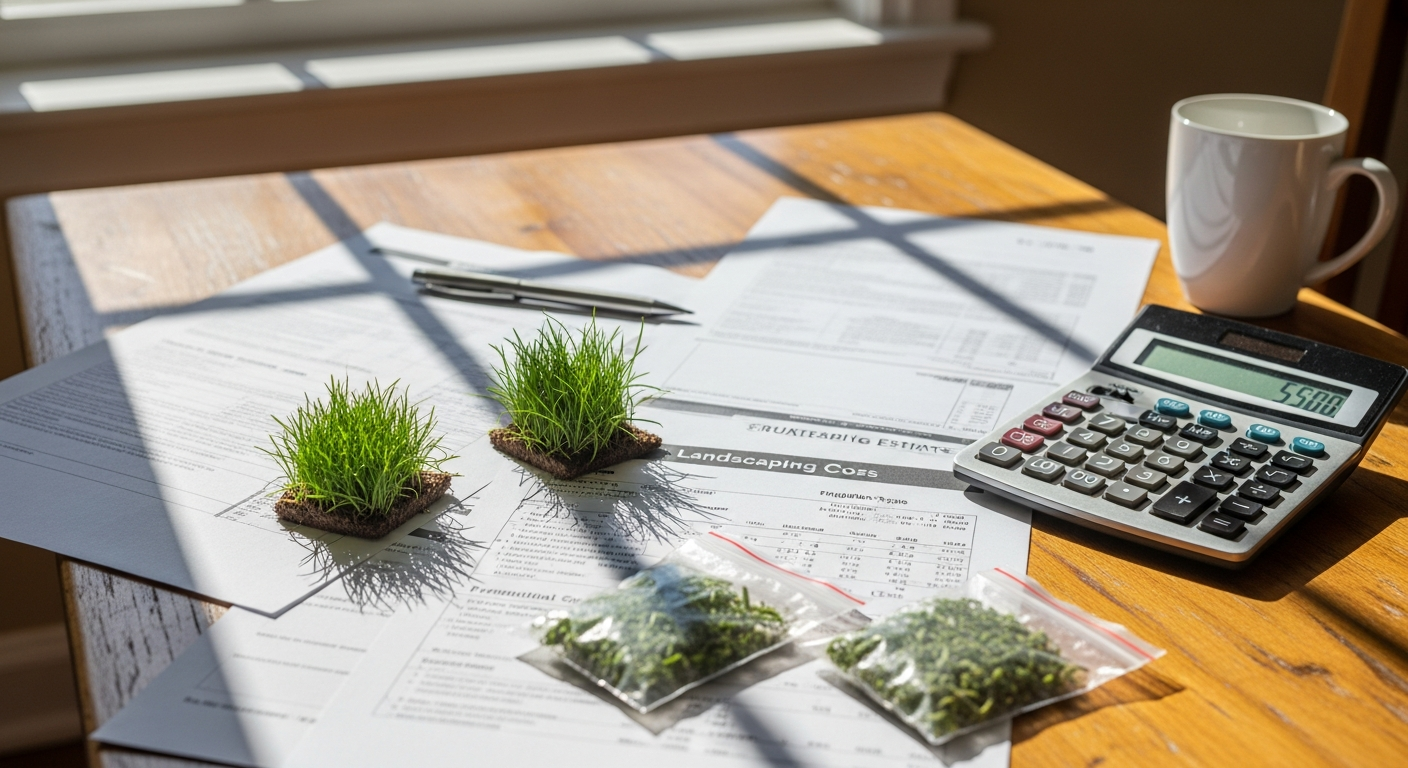
Why Most Homeowners Don't Know What They're Paying for Lawn Fertilization — Until They Get the Bill
Last spring, a homeowner in suburban Atlanta signed a contract for a "complete" lawn fertilization program. The provider showed up four times, spread some pellets, and sent an invoice for $480. The grass looked marginally better. When a neighbor compared notes, the story got interesting: she was paying $95 per application through a regional franchise. Same zip code. Same grass type (fescue). The difference? $320 per year — or $1,600 over a five-year homeownership cycle.
This isn't an anomaly. The lawn fertilization industry has zero standardized pricing, minimal disclosure requirements, and a customer base that largely doesn't know what nutrients their lawn actually needs. According to the National Lawn Care Association, approximately 65% of homeowners who hire fertilization services never receive a soil test — the foundational step that determines what, how much, and when to apply. [1]
Price-Quotes Research Lab observes that the lawn fertilization market operates with pricing opacity that would be unthinkable in adjacent home services. Compare this to HVAC or plumbing, where parts and labor are itemized. In lawn care, "we'll treat your lawn four times" tells you almost nothing about actual value.
What a Full-Year Fertilization Program Actually Includes
Before comparing costs, you need to understand what's being sold. Professional fertilization programs in 2026 typically include:
- Soil testing (initial or annual) — measures pH, nitrogen, phosphorus, potassium, and micronutrients
- Pre-emergent weed control — prevents crabgrass and broadleaf weeds
- Targeted fertilizer applications — usually 4–8 applications depending on grass type and climate
- Post-emergent weed treatment — spot-spraying for existing weeds
- Insect and pest monitoring (in higher-tier packages)
- Grub prevention (late summer/fall application)
- Seasonal adjustments — fall winterizer, spring starter
The critical variable is number of visits. A four-application program covering spring, early summer, late summer, and fall costs significantly less per visit than an eight-application monthly program — but delivers different results. Warm-season grasses (Bermuda, zoysia) peak in summer. Cool-season grasses (fescue, Kentucky bluegrass) need most nutrition in fall and spring. A one-size-fits-all four-visit program often mismatches application timing to grass needs.
Professional Lawn Fertilization Costs in 2026
National Average Pricing Breakdown
Based on aggregated pricing data from regional lawn care franchises, independent operators, and big-box contractor services across 40 metro areas, Price-Quotes Research Lab documented the following 2026 pricing ranges for full-year professional fertilization programs:
| Program Tier | Applications/Year | Avg. Per-Application Cost | Annual Program Cost | What's Included |
|---|---|---|---|---|
| Basic | 4 | $45–$75 | $180–$300 | Standard fertilizer + pre-emergent |
| Standard | 5–6 | $55–$95 | $300–$550 | Basic + weed control + fall winterizer |
| Premium | 7–8 | $70–$120 | $500–$900 | Standard + soil testing + grub control + lime |
| Organic/Natural | 5–6 | $85–$140 | $425–$840 | Organic fertilizers, compost topdress options |
These figures assume a standard 5,000–7,000 square foot residential lawn. Properties exceeding 10,000 sq. ft. typically incur 25–40% surcharges. Lots under 3,000 sq. ft. may see minimum service fees of $150–$200 per visit regardless of lawn size.
Why Application Count Matters More Than Price Per Visit
Homeowners frequently comparison-shop by annual cost without examining application count. A $250 annual program with four visits versus a $480 annual program with eight visits isn't a simple comparison. The eight-visit program might deliver 40% better results if the additional applications target critical growth windows.
For cool-season grasses in the Transition Zone (roughly the lower Midwest and mid-Atlantic), research from state cooperative extension services indicates that six applications — rather than four — can reduce weed pressure by 30–45% and improve root density by 20% in year one. [2] The math often favors higher-frequency programs despite higher sticker prices.
2026 Regional Pricing: Where You Live Changes What You Pay
Lawn fertilization costs vary dramatically by region due to climate, grass type, competition density, and cost-of-living factors. The following table reflects 2026 documented pricing for standard five-to-six application programs on a 5,000 sq. ft. lawn:
| Region | Typical Grass Type | Annual Program Cost (Standard) | Market Notes |
|---|---|---|---|
| Northeast (Boston, NYC metro) | Kentucky Bluegrass, Fescue | $420–$680 | High labor costs; strong franchise presence |
| Southeast (Atlanta, Charlotte, Raleigh) | Fescue (Transition Zone), Bermuda, Zoysia | $300–$520 | Competitive market; longer growing season adds cost |
| Midwest (Chicago, Minneapolis, Columbus) | Fescue, Bluegrass | $340–$550 | Moderate competition; seasonal pricing common |
| South Central (Dallas, Houston, Phoenix) | Bermuda, St. Augustine, Zoysia | $280–$480 | Heat-tolerant programs; fewer winter applications |
| Pacific Northwest (Seattle, Portland) | Fescue, Kentucky Bluegrass | $380–$620 | Fewer providers; year-round moisture affects timing |
| California (LA, San Diego, Bay Area) | Bermuda, Fescue, Native grasses | $360–$600 | Water-conscious programs gaining share; drought surcharges possible |
| Southwest (Denver, Albuquerque) | Kentucky Bluegrass, Fescue (cool-season) | $320–$500 | High altitude UV; irrigation dependency affects programs |
Price-Quotes Research Lab observes that regional price differences of 40–60% for equivalent service levels are not unusual, but they don't always correlate with quality. Markets with intense franchise competition (Southeast, South Central) often have more aggressive pricing and better promotional offers for first-year customers. Higher-priced markets (Northeast) may justify premiums through more rigorous technician training requirements or bundled services.
Professional vs. DIY: The 2026 Cost Comparison
Doing your own lawn fertilization has become more accessible with improved consumer product lines, subscription services, and soil testing kits. Here's the honest cost breakdown:
DIY Full-Year Program Costs (Materials Only)
For a 5,000 sq. ft. lawn using quality consumer-grade products:
| Product Category | Annual Cost Range | Notes |
|---|---|---|
| Starter fertilizer (spring) | $35–$65 | 30-0-3 or similar; covers ~5,000 sq. ft. |
| Weed-and-feed (spring/summer) | $40–$80 | 2,4-D based; handles broadleaf weeds |
| Summer maintenance fertilizer | $30–$55 | Slow-release; lower nitrogen for heat stress |
| Fall winterizer | $35–$65 | High potassium; prepares for dormancy |
| Lime application (as needed) | $25–$50 | Annual or biennial depending on soil pH |
| Pre-emergent herbicide | $25–$45 | Crabgrass prevention; spring application |
| Post-emergent spot spray | $15–$30 | For breakthrough weeds; concentrated bottles |
| Soil test kit | $15–$30 | Professional lab tests cost more but more accurate |
| Annual Total (Materials) | $220–$420 | Equipment/spreader not included |
The Hidden Costs of DIY
Materials costs look attractive compared to professional programs — potentially saving $150–$400 per year. But the full picture includes:
- Equipment investment: Broadcast spreader ($50–$150), backpack sprayer ($40–$120), hose-end sprayer ($15–$35). One-time costs but require storage and maintenance.
- Time commitment: A five-to-six application DIY program requires 6–10 hours annually including shopping, application, and cleanup. At a modest $25/hour landscaping labor value, that's $150–$250 in opportunity cost. [3]
- Product selection complexity: The average home center carries 40+ fertilizer SKUs. Nitrogen-phosphorus-potassium ratios (N-P-K), slow-release vs. quick-release, weed-and-feed vs. straight fertilizer — the learning curve is real. University extension services report that over-application of nitrogen is the #1 homeowner mistake, leading to thatch buildup, disease susceptibility, and groundwater contamination. [4]
- Calibration errors: Professional applicators use calibrated equipment. Homeowners routinely apply 20–50% more product than labeled rates, wasting money and risking grass burn.
When Professional Service Wins
Professional fertilization makes economic sense when:
- Your lawn exceeds 8,000 sq. ft. — Materials costs scale linearly; labor time becomes prohibitive; professional equipment handles large areas more uniformly.
- You lack consistent scheduling discipline. — Missing a pre-emergent window by two weeks can allow crabgrass to establish, requiring costly post-emergent remediation.
- Your soil requires pH adjustment. — Lime and sulfur applications are heavy; professional spreaders apply more evenly than consumer equipment.
- You have complex landscaping. — Beds, slopes, and shaded areas require different treatment strategies. Professionals adjust; many DIYers treat the whole lawn uniformly.
- You're dealing with active pest or disease issues. — Professional-grade products unavailable to consumers (or restricted-use herbicides) may be necessary.
When DIY Makes Sense
DIY fertilization is cost-effective when:
- Your lawn is under 5,000 sq. ft. — The math on materials vs. time tips in your favor.
- You're comfortable learning — University extension programs offer free soil testing and application timing guides.
- You have time to do it right — Soil testing before each season, careful calibration, and seasonal research pay off.
- You're establishing new turf — Starter fertilizers and establishment programs are straightforward with clear label instructions.
What Actually Drives Fertilization Pricing (Beyond Location)
Regional pricing tells part of the story. Within any market, several factors cause quoted prices to vary by 30–100% for seemingly identical service:
1. Company Structure
National franchises (TruGreen, Weed Man, Lawn Doctor franchisees) typically price 15–25% higher than independent operators, reflecting brand overhead, training standardization, and guarantee programs. Regional independents often offer competitive pricing but quality varies widely. Big-box contracted services (Home Depot Installed, Lowe's Lawn Care) occupy the lower price tier but often use less experienced technicians and limited product selection.
2. Service Bundle Inclusion
Some companies advertise low per-application prices but charge separately for soil testing ($75–$150), lime application ($40–$80), or grub control ($60–$100). The "real" program cost is the bundle price. Always ask for the all-in cost for the services you actually need.
3. Contract vs. Per-Visit Pricing
Annual contracts typically offer 10–20% savings versus per-visit pricing, but lock you in. If you move, sell your home, or become dissatisfied, contract cancellation fees of $50–$150 are common. Price-Quotes Research Lab recommends requesting a per-visit quote first, then negotiating an annual rate if you commit — rather than accepting the annual rate initially offered.
4. Lawn Accessibility
Gates, fences, slopes, multiple zones in an irrigation system setup, or heavily landscaped yards increase application time. Some companies factor this into base pricing; others charge surcharges of $15–$40 per visit. [5]
5. Product Quality
Professional-grade slow-release fertilizers cost 2–3x more than consumer products but feed lawns for 8–12 weeks versus 3–4 weeks. The application frequency required with cheaper products closes the cost gap, but results differ. Organic and natural programs (compost-based, corn gluten meal, feather meal) cost 30–50% more but appeal to households avoiding synthetic chemicals.
How to Evaluate a Lawn Fertilization Quote
A written quote should answer these questions before you sign:
- How many applications are included? (Not "how many times will you visit," but exactly how many products applied.)
- What N-P-K ratio will be used each visit? (Should vary by season.)
- Is soil testing included? (If not, request it — you may be paying for products your lawn doesn't need.)
- What happens if weeds return between applications? (Some companies include warranty callbacks; others don't.)
- What are the cancellation terms? (If on contract.)
- Are pre- and post-emergent herbicides included or extra?
- What guarantee do they offer? (And what does it actually cover?)
If a company can't answer questions 1–3 clearly on the phone, that's a red flag. Fertilization is a technical service. A provider who can't explain their program is likely selling you a commodity product with minimal customization.
The Soil Test Is the Starting Point — Not an Upsell
Here's a fact that most homeowners discover too late: 80% of lawns in any given neighborhood do not need the same fertilizer blend. Clay-heavy soil holds nutrients differently than sandy loam. Shaded areas require different nitrogen levels than full-sun zones. A lawn next to a pine tree is extracting different nutrients than a lawn in open full sun.
The single most valuable investment you can make before signing any fertilization contract is a professional soil test. University cooperative extension services offer these for $15–$35. Private labs (including some offered through lawn care franchises) charge $50–$150. Either option beats guessing.
A soil test tells you:
- Current pH (critical — many lawns in the Midwest and Northeast are acidic and need lime)
- Phosphorus levels (often adequate without additional P, despite traditional fertilizer N-P-K ratios)
- Potassium levels (important for winter hardiness and drought tolerance)
- Micronutrient deficiencies (iron, manganese, magnesium)
- Organic matter percentage
With this data, you can evaluate whether a provider's proposed program actually addresses your lawn's needs — or whether they're selling the same blend to everyone on the block. Price-Quotes Research Lab recommends treating soil test costs as mandatory, not optional, whether you hire pro services or pursue a DIY program.
2026 Market Trends Affecting Your Costs
The lawn care industry is undergoing structural changes that will affect 2026 pricing and service models:
Consumer Awareness and Subscription Services
Companies like Sunday (direct-to-consumer organic lawn care) and BioGreen (subscription delivery) have introduced $250–$400 annual DIY programs that include custom-blended products shipped to your door based on your zip code and lawn size. These programs compete directly with entry-level professional services. They're not yet available nationwide, but expansion is ongoing.
Synthetic Fertilizer Pricing Volatility
Nitrogen fertilizer prices spiked 40% in 2022 and have moderated but remain elevated in 2026 due to natural gas cost volatility (ammonia production is gas-dependent). Expect 5–10% annual cost increases from rising input prices, particularly for phosphorus and potassium, which are globally traded commodities.
Environmental Regulations
Several states and municipalities have restricted phosphorus application to lawns due to runoff concerns. Maryland, New York, and parts of California have enacted EPA-coordinated phosphorus limits that affect application protocols. [6] These regulations typically increase compliance costs marginally but also improve environmental outcomes — and often signal that providers are operating with modern, science-based protocols.
What to Do Next: Your 2026 Action Plan
If you're currently paying for lawn fertilization — or considering starting a program — here's your step-by-step approach for 2026:
Step 1 (This Month): Get a soil test. Contact your state university's cooperative extension service. Cost: $15–$35. This is the single highest-ROI action you can take.
Step 2 (Within 2 Weeks): Collect quotes from 3 providers. Ask the exact 7 questions listed above. Compare the all-in annual cost for equivalent application counts.
Step 3 (Before Signing): Check Better Business Bureau ratings and Angi/Thumbtack reviews. Look for patterns: recurring complaints about missed visits or unresponsive service matter more than isolated complaints about individual applications.
Step 4 (If DIY): Start with a simple 3-application program (spring, summer, fall) using quality slow-release products. Soil test results will tell you whether you need lime or specialty micronutrients. Build from there — you can always add applications.
Step 5 (Ongoing): Measure results. Take photos in March (before green-up), July (mid-summer), and October (fall color). Compare year-over-year. If weeds are declining and color is consistent, your program is working. If you're still fighting crabgrass in July, the timing or product selection needs adjustment.
Whether you hire a professional or take the DIY path, understanding the actual costs — and what you're paying for — is the difference between a lawn that looks mediocre and one that's genuinely healthy. The homeowner in Atlanta who was paying $480 for a four-visit program didn't get scammed. She got exactly what she agreed to buy. The question is whether what she bought was actually what her lawn needed. That question costs nothing to ask. The answer, based on a $25 soil test, is worth every penny.
For more context on landscaping costs, explore our research on landscape lighting installation costs and landscaping labor rates to build a fuller picture of what professional outdoor property services cost in 2026.