Tree Removal Costs 2026: Small vs Large, Stump Grinding, and When to Call an Arborist
Tree Removal Costs 2026: Small vs Large, Stump Grinding, and When to Call an Arborist
Published 2026-04-10 • Price-Quotes Research Lab Analysis
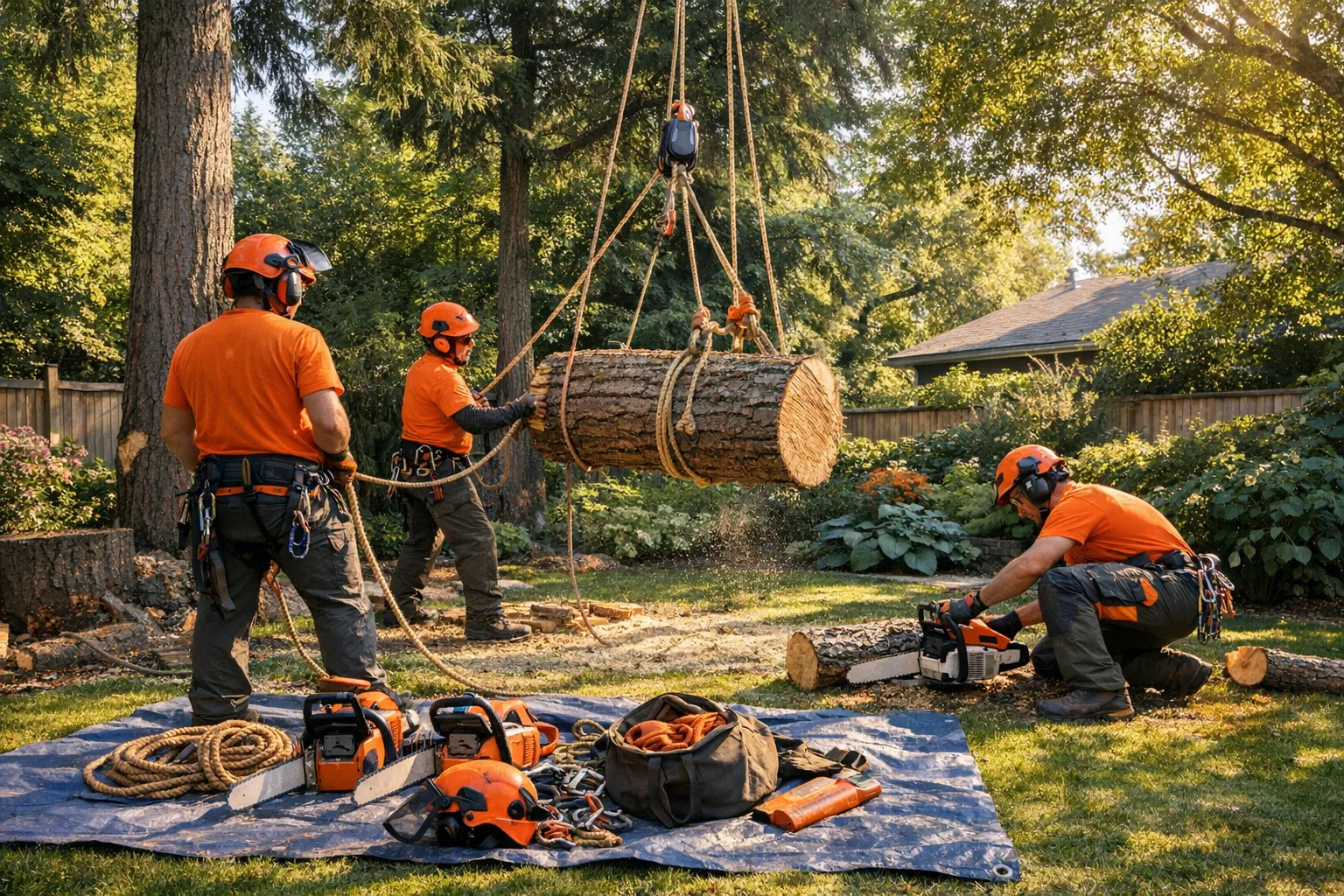
The Price Gap Is Absurd: Removing One Big Tree Costs What 40 Small Ones Don't
Here's a number that makes homeowners choke on their coffee: removing a towering 80-foot oak next to your house will set you back $3,000 to $8,000 or more, while yanking out a 20-foot ornamental in an open yard runs just $200 to $500. That's a 4,000% price swing. Same species. Same homeowner. Completely different universe of costs. According to 2026 pricing data from LandscapioAI, the tree removal industry doesn't have standard rates—it has wildcards disguised as estimates.
Most homeowners in 2026 pay between $400 and $2,000 for tree removal. But that number is about as useful as saying "cars cost between $20,000 and $200,000." It technically works, but it tells you nothing about what you're actually buying. This guide will. Price-Quotes Research Lab spent weeks pulling real pricing data, running calculator models, and cross-referencing contractor quotes to give you numbers you can actually use at the negotiating table.
Tree Removal Cost Breakdown by Size in 2026
Tree size is the single biggest cost driver. Not location. Not species. Size. Specifically, height and trunk diameter measured at 4.5 feet from the ground—arborists call this DBH, or Diameter at Breast Height. It's the industry standard for a reason: it predicts how much wood needs to come down, how long the job takes, and how much danger the crew faces.
Small Trees: Under 30 Feet
Cost: $200 – $500
This is your ornamental cherry, dogwood, small fruit tree, or that scrubby pine that never quite took off. Two workers can handle these with handheld equipment. No crane. No cable rigging. No neighbors nervously watching from their porches. At under 30 feet with a trunk diameter under 12 inches, crews typically finish in one to three hours. The HomeCalc estimator pegs these at $350 on the low end nationally, with $200 being realistic in rural areas with easy access. In tight urban lots, even small trees can climb toward $500 once you factor in debris hauling and tight maneuvering. Small trees are the only category where a ambitious DIYer with a chainsaw and a weekend might actually pull this off—but we'll get to that nightmare scenario later. Cost: $500 – $1,200
Your mature maple, medium oak, red pine, or sweetgum falls here. These are the trees that make neighborhood landscapes feel established. They're also the jobs where homeowners start sweating the quote. A 45-foot tree with an 18-inch trunk diameter will run roughly $1,200 according to the Remodel Cost Calculator's 2026 model. The range stretches from $500 in ideal conditions—open yard, healthy tree, no structures nearby—to $1,200+ when the tree sits above a fence line, brushes power lines, or shows signs of internal rot. Time estimate: three to five hours for a competent crew. Here's where it gets expensive fast: if that medium tree is dead or dying, add 25% to 40% to the quote. Dead trees are unpredictable. They crack, split, and fall in ways that surprise even experienced crews. Contractors price that unpredictability into the hourly rate. Cost: $1,000 – $2,500
Your century oak. Your towering tulip poplar. That pine that used to provide nice shade but now looks like it's plotting something. At 60 to 80 feet, you're real money territory, and for good reason: these jobs require cranes, certified climbers, and detailed execution plans. The UseCalcPro estimator puts large tree removal at $1,750 average, with a range of $1,000 to $2,500 depending on conditions. These jobs take six to ten hours minimum. A three-person crew with a bucket truck is standard. If the tree is within 20 feet of a structure, you'll often see a dedicated spotter, extra insurance requirements, and quotes that reflect the liability. At this height, wind becomes a serious factor. Experienced arborists won't touch these trees in sustained winds over 15 mph. Weather delays can push completion into a second day, which means you're paying for two mobilization fees. Cost: $3,000 – $8,000+
Welcome to the big leagues. A 90-foot white oak in your backyard, leaning two degrees toward your living room, requires a crane, a rigging crew, sectional dismantling, and possibly a municipal permit. This isn't tree removal—it's a controlled demolition with environmental sensitivities. Ecostify's 2026 analysis confirms that XL removals with crane work regularly hit $5,000 to $8,000, with some urban jobs exceeding $10,000 when underground utilities, narrow access, and historical preservation requirements complicate the job. The StumpOFF pricing data shows similar numbers for Connecticut and comparable Northeast markets where mature hardwoods dominate the canopy. At this scale, you're not comparing quotes—you're evaluating risk management strategies. The cheapest bid at this height should concern you more than the expensive one. Here's what most homeowners don't realize until the tree is on the ground: the stump is a separate job. Removing the tree doesn't include the stump. Contractors will happily leave a 24-inch stump sitting in your yard for the same price as the tree removal—and they'll tell you this is standard practice. It is. But it still annoys everyone. Cost: $150 – $400
Stump grinding uses a specialized machine with a rotating cutting disk to mulch the stump below ground level, typically 6 to 12 inches below. The root system remains in place but the visible stump disappears, allowing you to replant, pave, or seed over the area. Costorie's 2026 stump removal guide breaks it down simply: $2 to $5 per inch of stump diameter. An 18-inch stump costs $36 to $90 to grind. A 30-inch stump—common for old oaks—costs $60 to $150. Most contractors have minimum charges of $150 to $250, so grinding a small stump often costs proportionally more per inch than grinding a large one. Grinding takes one to three hours depending on stump size and root spread. The grinding debris—wood chips mixed with soil—stays on-site. Most contractors will either haul it away for an additional fee or leave it for you to use as mulch. Some charge $50 to $100 for hauling. Cost: $300 – $800+
Full stump removal means extracting the entire root ball from the ground. This is more invasive, more expensive, and frankly, more destructive to your yard than grinding. The contractor digs out the root system, which often means tearing up a significant portion of your lawn. This approach makes sense if you're replacing the tree with a fence post, a deck footing, or another structure that can't accommodate residual roots. For a typical homeowner just wanting the stump gone, grinding achieves the practical goal at a fraction of the cost and damage. Ask yourself these questions: Size is the headline. But a dozen other factors determine whether your quote lands at the low end of the range or the stratosphere. Understanding these factors turns you from a confused homeowner into an educated buyer—which matters when you're comparing three different bids that all say "$1,200" but cover completely different scopes of work. The single biggest price amplifier after size. A tree in an open field costs X. The same tree next to a house costs 1.5X to 2X. The same tree sandwiched between a house and a pool costs 2X to 3X. Every foot of structure adjacency increases the complexity exponentially. The reason is rigging. Crews can't just drop a 60-foot tree—they have to control its fall with cables, slings, and precise cuts. The closer the tree is to something valuable, the more surgical the process becomes. This is skilled labor, and it commands skilled labor rates. Can a 70-foot crane truck reach your backyard? If the answer is "no," then the crew is doing this the hard way—by climbing, cutting sections, and lowering each piece by hand. That takes longer. Longer takes more money. Tight access scenarios include: Dead trees cost more to remove. This seems counterintuitive—there's less wood, right?—but dead trees are structurally compromised. They crack unexpectedly. They have hidden decay. They fall in unpredictable directions. Contractors price this uncertainty into every dead tree quote, typically adding 25% to 50% compared to a healthy specimen of the same size. Diseased trees fall into a similar category, especially if the disease affects the root system. Oak wilt, Dutch elm disease, and root rot can weaken trees in ways that aren't visible from the outside. An arborist assessment before the job starts isn't optional—it's essential for your safety and your contractor's. Any tree within 10 feet of power lines triggers a different safety protocol. In most jurisdictions, the utility company must be notified. Sometimes the utility will de-energize lines temporarily. Sometimes a dedicated spotter from the utility must be present. These coordination costs show up on your invoice. Never, under any circumstances, attempt to remove a tree near power lines yourself. This is how people die. This is not a cost-saving opportunity. Storms don't wait for convenient timing, and neither do fallen trees. Emergency tree removal—defined as a tree that's already fallen on a structure, blocking a driveway, or creating an immediate safety hazard—costs 50% to 100% more than planned removal. The premium covers after-hours labor, expedited scheduling, and the reality that emergency jobs rarely occur in ideal weather conditions. If a thunderstorm knocked a tree onto your garage at 11 PM on a Saturday, expect weekend emergency rates plus a call-out fee. Plan ahead. If you know a tree is hazardous—leaning, dead, root-damaged—remove it before the next Nor'easter makes the decision for you. The tree comes down. Now what? All those logs, branches, and wood chips need somewhere to go. Most contractors include basic debris handling in their quotes—chipping on-site and hauling away, or leaving the chips for you to keep. But if you want the debris removed to a specific location, or if you want the logs saved and stacked, or if the job generates more debris than expected, costs climb. Standard options: Not all tree workers are created equal. The difference between an arborist and a guy with a chainsaw and a pickup truck is the difference between a surgeon and someone who watched a lot of YouTube videos. Call a certified arborist—look for ISA (International Society of Arboriculture) credentials—when: ISA-certified arborists have passed rigorous exams and committed to continuing education. They're trained in proper pruning, safe removal techniques, and tree biology. They carry liability insurance. They can assess whether a tree can be saved or must come down—and that assessment alone might save you thousands. This Old House's 2026 tree removal guide recommends always verifying ISA certification and insurance before signing any contract. It takes five minutes. The liability if you don't could take years to unwind. When can a general landscaping contractor handle the job? Small trees under 30 feet, healthy condition, open access, no structures nearby. Even then, verify they have tree removal-specific insurance. General liability won't cover a crane that crushed your neighbor's fence. Every year, homeowners convince themselves they can save $800 by renting a chainsaw and removing a medium tree themselves. Some of them are right. Most are not, and the ones who are wrong end up on local news, on the phone with their insurance agent, or in an emergency room. The math rarely works out. A typical rental chainsaw runs $50 to $100 per day. A truck or trailer to haul debris costs $50 to $150. Your time—full day of labor, probably more—has value. If everything goes perfectly, you might save $400 to $600. If everything does not go perfectly: Price-Quotes Research Lab's analysis of insurance claim data shows that DIY tree removal injuries cost homeowners an average of $18,000 to $45,000 in out-of-pocket expenses after insurance denials. The average professional tree removal costs $800. Do the math. Never accept a quote over the phone. Never accept a quote from someone who looked at your property from the street. Real tree removal estimates require an in-person assessment where the contractor measures the tree, evaluates site access, checks for overhead obstacles, and identifies hidden complications. Here's the process: Red flags in tree removal quotes: Tree removal costs vary significantly by region. Labor rates, equipment availability, local regulations, and the types of trees common to an area all affect pricing. HomeGuide's 2026 market analysis shows that urban Northeast and West Coast markets run 20% to 40% higher than rural Midwest and Southern markets for identical work. The species of tree matters too. Palm trees—common in Florida and Southern California—are technically grasses and remove differently than hardwoods. Their cost structure is lower because the work is simpler. Conversely, certain hardwoods with dense wood (hickory, mesquite, some oaks) take longer to cut and may dull chainsaw blades faster, adding labor time. Permit requirements also vary. Many municipalities require permits for tree removal, especially for trees over a certain diameter or in certain protected zones. Permit costs typically run $50 to $300 and may require an arborist's assessment. Budget for this. Finding out you need a $200 permit on the day of the job is not how you want to start a Saturday. If you're removing multiple trees, ask about bulk pricing. Most contractors offer 10% to 20% discounts for multiple trees on the same property, same day. The mobilization cost—the truck, crew, and equipment arriving at your property—spreads across more work. The Remodel Cost Calculator explicitly flags bulk discounts as a standard industry practice, but notes that the discount typically applies to trees of similar size and difficulty. Mixing one small ornamental with two 70-foot oaks probably won't qualify for the bulk rate on the small tree. When a tree falls on your house at 2 AM, you don't have time for three quotes. You call whoever can get there first. That's reality. But even in emergencies, you have options. If the tree hasn't caused structural damage yet but is leaning and about to fall, call your homeowner's insurance first. Many policies cover tree removal costs if the tree damaged a covered structure. Document everything with photos before the contractor starts work. Your insurance adjuster will want a clear before-and-after picture. If the tree is simply down and blocking access but hasn't damaged anything, you have more flexibility. You can still get competitive quotes, though you may pay a premium for same-week service. Once the emergency is handled, review your policy. Does it cover the full removal cost? Only debris removal? Are there caps per tree or per incident? Understanding your coverage before the next storm means you're not making financial decisions with adrenaline in your bloodstream. Homeowners sometimes confuse tree removal with tree trimming, and the cost difference is dramatic. Tree trimming—proper pruning to maintain tree health and structure—typically runs $250 to $750 per tree depending on size. AskDOSS's pricing analysis notes that regular trimming every three to five years can extend a tree's life, improve property value, and reduce the likelihood of emergency removal down the road. If a tree can be saved through proper pruning, that's almost always the better financial decision. Mature trees add 7% to 25% to property values, according to multiple real estate studies. Removing one unnecessarily isn't saving money—it's spending your home equity on a problem that didn't need solving. Before removing any healthy tree, consult an arborist. They can assess whether pruning would solve the problem—whether the tree is blocking light, interfering with structures, or creating risk. Removal should be the last resort, not the first call. Print this list. Use it on every estimate. Any contractor who resists these questions isn't a contractor you want on your property. Professional arborists expect these questions. They have answers prepared. The cheapest quote is almost never the best quote. But there are legitimate ways to reduce costs: Price-Quotes Research Lab found that homeowners who got three or more quotes saved an average of 18% compared to those who accepted the first reasonable estimate. Knowledge is leverage. For planning purposes, here's what you should have in mind heading into 2026: These are national averages. Your actual cost depends on tree size, location, access, condition, and the contractor you choose. The only way to know your exact number is to get real, on-site estimates from certified arborists. Don't wait for an emergency. If a tree in your yard is dead, dying, or leaning toward something valuable, get three quotes this week. The cost of removal is predictable. The cost of waiting is not.Medium Trees: 30 to 60 Feet
Large Trees: 60 to 80 Feet
Extra Large Trees: 80+ Feet
Stump Grinding and Stump Removal: What Lies Below
Stump Grinding Cost
Full Stump Removal Cost
The Stump Decision Tree
What Actually Drives Tree Removal Prices Up
1. Proximity to Structures
2. Access Limitations
3. Tree Condition
4. Power Line Proximity
5. Emergency and Storm Damage
6. Debris Disposal
When to Call a Certified Arborist (And When Any Contractor Will Do)
The DIY Trap: Why Saving Money Here Usually Costs More
How to Get Accurate Tree Removal Quotes
Regional Price Variations: Why Your Neighbor's Quote Means Nothing
What About Bulk Discounts?
Emergency Tree Removal: The Exception to Every Rule
Tree Removal vs. Tree Trimming: Knowing the Difference
What Questions to Ask Before Signing
How to Save Money on Tree Removal Without Cutting Corners
Final Verdict: What You Should Actually Budget
Key Questions
How much does it cost to remove a small tree under 30 feet?
What is the average cost to remove a large tree over 60 feet?
How much does stump grinding cost?
Does tree removal include stump grinding?
What factors increase tree removal costs besides size?
When should I call a certified arborist versus a general contractor?
Is DIY tree removal worth the cost savings?
How do I get accurate tree removal quotes?
What is the average total cost to remove a tree and grind the stump?
Related Services