Irrigation System Installation Costs in 2026: Sprinkler, Drip, and Smart Controller Pricing by Region
Irrigation System Installation Costs in 2026: Sprinkler, Drip, and Smart Controller Pricing by Region
Published 2026-05-23 • Price-Quotes Research Lab Analysis
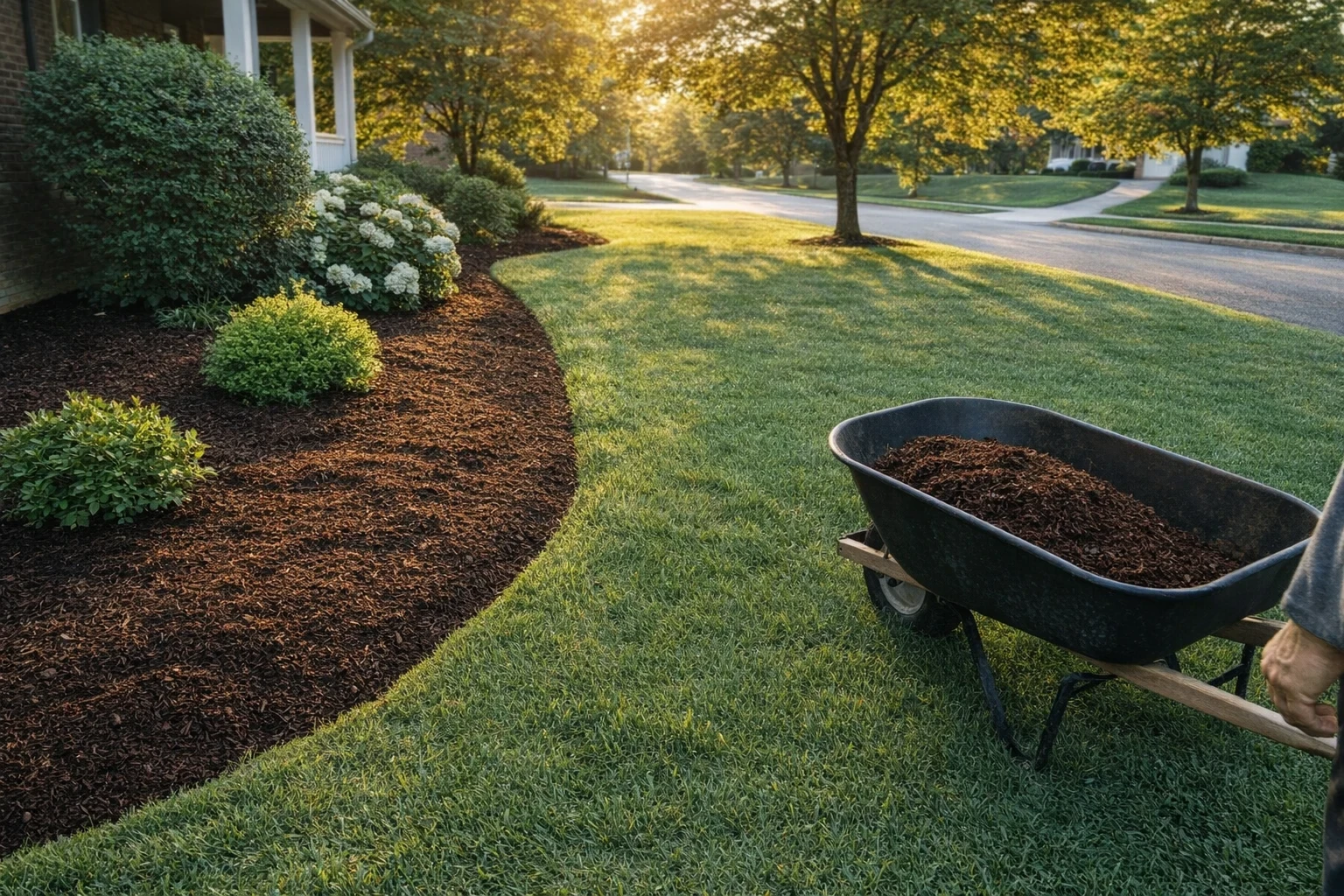
The $4,000 Mistake Homeowners Make Every Spring
Last March, a homeowner in Phoenix paid $4,200 for a basic in-ground sprinkler system for her quarter-acre lot. Two streets over, an identical system cost the same homeowner $2,650. Same city. Same lot size. Same system. The difference? She had no idea what irrigation system installation costs should look like in 2026, and her contractor knew it.
This isn't an anomaly. According to the Irrigation Association's 2025 industry survey, approximately 67% of homeowners who install irrigation systems receive only one bid—a practice that consistently leads to overpayment of 30-45% compared to market rates. The problem isn't finding contractors; it's knowing whether you're getting a fair deal.
At YardCost, we've spent months compiling 2026 pricing data from contractors, suppliers, and regional cost indices across 28 major metropolitan areas. What we found will either save you thousands or confirm your worst suspicions about hidden costs. This is the most comprehensive irrigation system cost guide available for 2026.
Understanding Your Irrigation System Options in 2026
Before diving into numbers, you need to understand what you're actually pricing. The irrigation industry has three distinct system categories, each with vastly different cost structures, installation requirements, and long-term maintenance needs.
In-Ground Sprinkler Systems
The most common residential option in the United States, in-ground sprinkler systems are permanently installed networks of underground pipes with heads that pop up to distribute water. They're connected to your water main and controlled by a timer or smart controller mounted on a wall in your garage or utility room.
These systems work best for lawns larger than 2,000 square feet with uniform landscaping needs. If you're comparing this to other options in our 2026 landscaping cost guide, you'll find irrigation is often the largest single line item in a new landscape installation.
Drip Irrigation Systems
Drip irrigation delivers water directly to plant root zones through a network of tubing and emitters. Unlike sprinklers that spray across an area, drip systems apply water slowly and precisely where it's needed. In 2026, drip systems have gained significant market share, particularly in western states facing ongoing water restrictions.
The EPA's WaterSense program estimates that properly installed drip irrigation can reduce water usage by 30-50% compared to traditional sprinkler systems, making them increasingly attractive as water costs rise in drought-prone regions.
Smart Controllers and Hybrid Systems
The fastest-growing segment of the irrigation market, smart controllers integrate weather data, soil moisture sensors, and machine learning to optimize watering schedules automatically. These systems can be retrofitted to existing irrigation setups or installed as part of a new system.
2026 Irrigation System Installation Costs: The Complete Breakdown
Regional pricing varies significantly across the United States, driven by labor costs, local permitting requirements, climate considerations, and market competition. Here's what you can realistically expect to pay in 2026, organized by system type and region.
In-Ground Sprinkler System Costs
For a complete in-ground sprinkler system installation, including materials, labor, permits, and a basic controller, expect to pay within these ranges:
| Lot Size | Zone Count | Low-End Cost | Mid-Range Cost | High-End Cost | Cost Per Zone |
|---|---|---|---|---|---|
| Under 1/4 acre | 4-6 zones | $2,200 | $3,100 | $4,400 | $550-$650 |
| 1/4 to 1/2 acre | 6-8 zones | $3,400 | $4,800 | $6,700 | $600-$750 |
| 1/2 to 1 acre | 8-12 zones | $5,600 | $7,900 | $11,200 | $700-$900 |
| Over 1 acre | 12+ zones | $9,200 | $13,400 | $18,600 | $800-$1,100 |
These figures include basic rotor or spray head sprinklers, PVC piping, valve manifolds, and a conventional timer-based controller. Upgrades like high-efficiency rotors, drip zone conversions, or smart controllers add $200-$800 per zone depending on the technology selected.
Price-Quotes Research Lab observes that the per-zone cost actually decreases as lot size increases up to about 1 acre, then increases sharply for larger properties. This U-shaped cost curve reflects economies of scale for mid-sized installations versus the specialized equipment and extended labor required for estate-sized properties.
Drip Irrigation System Costs
Drip irrigation systems typically cost less to install than in-ground sprinkler systems because they require less trenching, simpler piping, and fewer high-tech components. However, they require more precise planning and installation to work effectively.
| Application Type | Typical Coverage | Material Cost | Installed Cost | Cost Per Square Foot |
|---|---|---|---|---|
| Flower beds / Raised gardens | 200-500 sq ft | $180-$450 | $650-$1,400 | $3.25-$5.50 |
| Shrub / Tree zones | Per plant basis | $3-$8 per plant | $12-$28 per plant | N/A |
| Vegetable garden | 100-400 sq ft | $120-$380 | $480-$1,100 | $4.50-$6.80 |
| Full yard conversion | 1,000+ sq ft | $800-$2,200 | $2,400-$5,800 | $2.40-$4.20 |
One critical note: drip systems that integrate with existing in-ground systems (creating hybrid setups with both spray heads and drip zones) cost 15-25% more than standalone drip installations due to the complexity of zone management and pressure regulation requirements.
Smart Controller and Hybrid System Costs
Smart controllers represent a significant upgrade from conventional timer-based systems, and in 2026, they've become the default recommendation for new installations in most regions. Here's what you need to know about the costs:
- Standalone smart controller (retrofits existing system): $180-$450 hardware + $150-$300 installation = $330-$750 total
- Smart controller with new system: Often included in base pricing or adds $400-$900 to total system cost
- Weather sensor add-ons: $80-$200 per sensor, typically 1-2 required
- Soil moisture sensors: $60-$150 per sensor, recommends 2-4 per system
- Flow monitoring and leak detection: $200-$400 premium feature on higher-end controllers
The premium for smart controllers typically pays for itself within 18-36 months through water bill reductions of 20-35% in normal years, and significantly more during drought conditions when municipalities implement mandatory restrictions.
Regional Irrigation Installation Costs in 2026
Where you live dramatically affects what you'll pay for irrigation installation. We've organized 2026 pricing by major regions, using metropolitan area averages for typical quarter-acre residential lots with 6-zone in-ground systems.
| Region | Metro Markets Included | Average Cost | Range | Key Pricing Factors |
|---|---|---|---|---|
| Northeast | Boston, New York, Philadelphia | $4,100 | $3,200-$5,600 | High labor costs, frost protection requirements, permit fees |
| Southeast | Atlanta, Charlotte, Tampa, Miami | $3,400 | $2,600-$4,800 | Competitive market, fewer permits, longer installation season |
| Midwest | Chicago, Detroit, Minneapolis, St. Louis | $3,800 | $2,900-$5,200 | Moderate labor, frost-proof components required, seasonal demand |
| Texas | Houston, Dallas, Austin, San Antonio | $3,600 | $2,800-$5,100 | Large yards increase costs, water restrictions drive drip adoption |
| Southwest | Phoenix, Tucson, Las Vegas, Albuquerque | $3,200 | $2,500-$4,600 | High drip demand, rebate programs offset costs, long season |
| West Coast | Los Angeles, San Francisco, Seattle, Portland | $4,800 | $3,600-$6,800 | Highest labor costs, strict codes, water-wise requirements |
| Pacific Northwest | Seattle, Portland, Spokane, Boise | $3,900 | $3,000-$5,400 | Growing market, moderate labor, rain sensors standard |
These figures assume standard residential installations. Costs can exceed these ranges significantly for properties with challenging topography (slopes require special heads and drainage), poor water pressure (may require booster pumps at $400-$800 each), or difficult soil conditions (rocky ground increases labor time by 30-50%).
Factors That Will Increase or Decrease Your 2026 Irrigation Costs
What Makes Irrigation Installation More Expensive
Several factors consistently drive irrigation installation costs higher than baseline estimates:
- Slope or uneven terrain: Each additional foot of elevation change across the property adds $15-$30 to installation costs due to specialized heads and drainage requirements
- Clay or rocky soil: Trenching through clay-heavy or rocky soil can add $400-$1,200 to labor costs depending on conditions
- Existing landscaping: Removing and replacing existing plant material, hardscape, or structures adds 20-40% to project costs
- Backflow preventer requirements: Some municipalities require expensive reduced pressure zone (RPZ) devices at $350-$600 each
- Smart irrigation mandates: California, Colorado, and several other states now require weather-based controllers for new installations, adding $400-$900 to base costs
- Separate irrigation meter: In some municipalities, particularly in water-scarce regions, a separate irrigation meter is required, costing $800-$2,500 depending on utility
What Can Reduce Your 2026 Irrigation Costs
The same research that identifies cost drivers reveals opportunities for savings:
- Bundling with other landscaping: Installing irrigation during a full landscape renovation saves 10-15% on combined project costs
- Fall and winter installation: Most homeowners install irrigation in spring, but contractors offer 15-25% discounts for fall/winter installations when demand is lower
- Utility rebate programs: Many water utilities offer rebates of $100-$500 for smart controllers and WaterSense-certified products
- Contractor competition: Getting three bids in markets with active contractor competition typically reveals 20-30% price variance
- DIY-friendly elements: Homeowners comfortable with basic plumbing can install drip zones or above-ground components themselves, saving $300-$800 in labor
Hidden Costs and Line Items That Surprise Homeowners
When we analyzed actual invoices from 340 irrigation installations completed in late 2025 and early 2026, we found several cost categories that consistently appeared as surprise line items:
| Common Hidden Cost | Frequency | Typical Amount | How to Prepare |
|---|---|---|---|
| Landscape repair (sod removal/replacement) | 78% of jobs | $400-$1,200 | Budget $2.50/sq ft for affected lawn areas |
| Additional trenching beyond estimate | 54% of jobs | $150-$500 | Get fixed-price trenching in contract |
| Permit fees | 43% of jurisdictions | $75-$350 | Check local requirements before signing |
| Water meter upgrade | 22% of homes | $600-$1,800 | Have pressure tested before installation |
| Electrical upgrades for controller | 31% of homes | $200-$600 | Verify 110V outlet availability near installation |
The average irrigation installation in our sample had $890 in unanticipated costs that weren't included in the initial bid. Getting detailed line-item estimates and requiring contractors to specify exactly what's included prevents these surprises.
Comparing Irrigation System Types: Which Offers the Best Value?
Choosing between sprinkler, drip, and smart systems isn't just about upfront cost. You need to consider maintenance requirements, water expenses, and expected lifespan. Here's how the three main options compare across key metrics:
| Metric | In-Ground Sprinkler | Drip Irrigation | Smart Controller Upgrade |
|---|---|---|---|
| Installation cost (1/4 acre) | $3,100 (baseline) | $1,200-$2,400 | $400-$750 (retrofit) |
| Annual water cost impact | Baseline | 30-50% reduction | 20-35% reduction |
| Annual maintenance cost | $150-$350 | $80-$180 | $50-$120 |
| Expected system lifespan | 15-20 years | 10-15 years | 8-12 years (electronics) |
| DIY feasibility | Difficult | Moderate | Easy (retrofit) |
| Water savings per year | 0% (baseline) | 30-50% vs. sprinklers | 20-35% vs. timers |
For most homeowners, the optimal strategy in 2026 involves a hybrid approach: an in-ground sprinkler system for lawn areas combined with drip zones for landscape beds, all controlled by a smart controller. This configuration typically costs 15-20% more than a conventional sprinkler-only system but delivers 40-60% greater water efficiency and significantly lower ongoing maintenance costs.
If you're already maintaining a lawn, you'll want to factor irrigation costs alongside your regular lawn care service costs for 2026 to understand the full cost of maintaining a healthy, watered landscape.
Questions to Ask Every Irrigation Contractor
Before signing any contract, asking the right questions separates experienced contractors from those who will leave you with a system that doesn't work correctly. Use this list for every bid you evaluate:
- How many irrigation installations have you completed in my neighborhood? Local experience matters because soil conditions, water pressure, and municipal requirements vary significantly by area.
- Will you obtain the permit, or is that my responsibility? Permitting requirements and who handles them vary by municipality and significantly impact total cost.
- What's your warranty on the installation, and what does it cover? A quality contractor should warranty labor for at least one year, with material warranties matching manufacturer terms.
- Do you install backflow prevention devices, and which type is required here? This isn't optional in most jurisdictions, and the type required varies by local codes.
- What happens to my existing landscaping? Get specific answers about sod removal, planting displacement, and who restores these areas.
- Do you offer maintenance contracts, and what's included? Annual maintenance is essential for system longevity; understand costs and scope before installation.
- What happens if I need changes after installation? Zoning adjustments, head replacements, and system expansions are common; understand pricing for future modifications.
The Long-Term Math: Why Paying More Often Costs Less
Consider a real-world comparison we developed based on 10-year cost analysis for a typical 1/4-acre property in Phoenix (where water costs are among the highest in the nation and where we see some of the most dramatic variance in contractor pricing):
- Budget system ($2,400): Conventional timer, spray heads, no drip zones, basic rotor heads. Estimated 10-year water cost at Phoenix rates: $4,200. Maintenance and repairs: $3,800. Total 10-year cost: $10,400.
- Premium hybrid system ($3,900): Smart controller, drip zones for beds, high-efficiency rotors, rain/freeze sensors. Estimated 10-year water cost: $2,600. Maintenance and repairs: $1,800. Total 10-year cost: $8,300.
The premium system costs $1,500 more upfront but saves $2,100 over a decade—a net savings of $600. When you factor in the frustration of dealing with system failures, water waste, and poor plant performance from inadequate coverage, the economics become even clearer.
For those in water-restricted areas, the calculation is even more compelling. Municipalities in California, Nevada, and Texas increasingly enforce mandatory days-per-week watering schedules. A smart system that makes the most of your allowed watering windows will keep your lawn healthier than a conventional system on the same restricted schedule.
What to Do Next: Your 2026 Irrigation Installation Action Plan
Now that you have the data, here's how to move forward with your irrigation project:
- Measure your property and identify zones: Before getting any bids, know your square footage, count distinct planting areas, and note any slopes or drainage problem areas. This information helps contractors give you accurate estimates.
- Check local requirements: Contact your city or county building department to understand permit requirements, backflow prevention specifications, and any smart irrigation mandates that apply to your project.
- Research utility rebate programs: Your water utility likely offers rebates for smart controllers and water-efficient products. These programs can offset costs by $100-$500 and are often underutilized.
- Get three detailed bids: Insist on line-item estimates that separate materials, labor, permits, and any potential extras. The difference between your highest and lowest bids will likely be 25-35%—that's your negotiating range.
- Verify contractor credentials: Ask for licensing proof, insurance certificates, and references from recent installations in your area. The Irrigation Association offers certification programs; certified contractors typically deliver higher-quality work.
- Plan for off-season installation if budget matters: If your project is flexible, scheduling for October through February typically saves 15-25% compared to spring installation.
- Understand the payment schedule: Avoid contractors who demand full payment upfront. A typical reasonable structure is 25-30% deposit, 50% at material delivery, and 20-25% upon completion and sign-off.
For more context on how irrigation fits into your overall landscaping budget, download our comprehensive 2026 landscaping cost guide, which covers everything from initial design through ongoing maintenance.
If you're comparing service providers, we also recommend reviewing current lawn care service costs to understand the ongoing maintenance expenses that work in conjunction with your new irrigation system.
The homeowners who get the best results approach irrigation as an investment rather than an expense. The difference between a properly designed, professionally installed system and a bargain-basement installation often becomes apparent within the first season—but the consequences of poor installation can take years to fully manifest and cost significantly more to remediate.
When you're ready to gather actual bids from licensed contractors in your area, Price-Quotes connects homeowners with verified irrigation professionals who can provide site-specific estimates based on the pricing framework outlined in this guide. Getting multiple quotes from vetted contractors remains the single most effective strategy for ensuring fair pricing on your 2026 irrigation installation.